
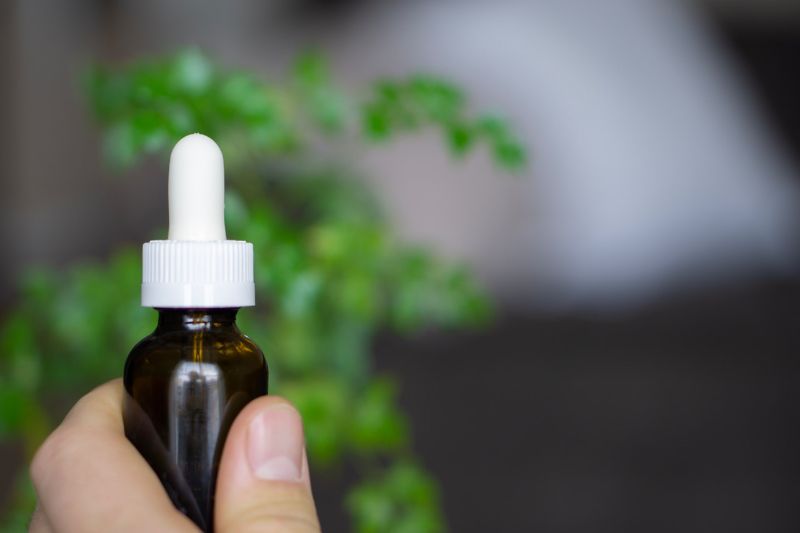
As an all-purpose cure for numerous infections and ailments before modern antibiotics were created, colloidal silver was widely utilized.
Before You Continue...
Do you know what is your soul number? Take this quick quiz to find out! Get a personalized numerology report, and discover how you can unlock your fullest spiritual potential. Start the quiz now!
It has recently had a resurgence in popularity, with some saying it may be used to treat bacterial, viral, and fungal illnesses in place of antibiotics or other medical therapies.
Lyme disease, TB, and even HIV/AIDs are some of the ailments it is claimed to heal.
Colloidal silver can be taken as a supplement or applied directly to the skin by those who use it.
Depending on the amount of silver in the solution, it can be found in a variety of strengths.

In colloidal silver, silver particles are suspended in a solution. As a treatment for bacterial, viral and fungal illnesses it was originally utilized in ancient times
Can you use colloidal silver in your mouth?
Colloidal silver dietary supplements are not supported by scientific data for any disease or condition.
- If you're looking for a way to add silver to your diet, don't bother.
- Silver can be inhaled, ingested, and used in jewelry manufacturing and soldering, as well as in the air, water, and food we consume.
- Homeopathic treatments that contain colloidal silver are sometimes offered for sale. See nccih.nih.gov/health/homeopathy for further details.
- Topical silver can be used in bandages and dressings to treat burns, skin wounds, and skin infections, among other medical applications. To prevent conjunctivitis (a disorder of the eye), it is also used to make medications for babies. However, colloidal silver-containing medications that can be taken orally are not yet available on the market as either prescription or over-the-counter products.
What does colloidal silver help with?
However, several businesses promote colloidal silver supplements as a panacea. They assert that it has immune-boosting properties, relieves chest congestion, and can be used to treat or prevent viral infections such as the common cold or COVID-19. Colloidal silver has also been touted as an aid in the treatment of cancer, HIV/AIDS, shingles, herpes, and vision issues, to name just a few illnesses. Despite this, there's no evidence to back up these assertions.
Can colloidal silver damage kidneys?
There has been a consumer advisory issued by the National Center for Complementary and Alternative Medicine (NCCAM). At http://www.nccam.nih.gov/health/alerts-silver/index.htm, you can read the advisory in its entirety.
A colloidal silver product is a liquid containing microscopic silver particles. Supplements that claim to improve the immune system; eliminate disease-causing organisms like bacteria, viruses, and fungi; offer an alternative to prescription antibiotics; and treat diseases like cancer and HIV/AIDS are being sold as food supplements…. There is no evidence to support these statements.
The FDA does not consider over-the-counter colloidal silver products to be generally recognized as safe and effective for diseases and disorders, according to the NCCAM. For making drug-like claims concerning these goods, the FDA has taken action against a number of corporations.
There are major adverse effects to using colloidal silver. One of these is argyria, a bluish-gray staining of the entire body. Argyria is a disease that cannot be cured or reversed. Among the other possible side effects are neurologic difficulties (e.g., seizures), renal damage and stomach distress. Additionally, prescription drugs such as penicillamine, quinolones, tetracyclines, and thyroxine may be hindered in their absorption by colloidal silver.
How many tablespoons of colloidal silver can you take in 1 day?
It is safe to consume any amount of colloidal silver, however one tsp. per day is the suggested daily dosage for most people.
How do you dilute colloidal silver?
A gallon of pure distilled water can be used to achieve an effective concentration of 3-5 ppm. Most supermarket stores carry distilled water. Taking out 16 ounces of the gallon distilled water container, pour the bottle of Colloidal Silver to it and shake it well. Colloidal Silver at the effective CS rate of 3-5 PPM will not be sufficient for a gallon (use only Distilled Water).

When should I start spraying colloidal silver?
Colloidal silver should be applied a day or two before you switch to blooming (12/12.) in order to feminize your plants. Every day until male sacs appear, begin sprinkling colloidal silver on fresh growth (typically 10-18 days.)
How much colloidal silver should I take for sinus infection?
Over the course of 28 days, participants in the intranasal colloidal silver treatment group will receive 2 mcg of silver per nostril twice day via intranasal spraying with a total daily volume of 0.8 ml.
Is colloidal silver good for joint pain?
An adolescent female has been diagnosed with a rare naturopathic drug-induced vasculitis. When the inciting agent is removed, drug-induced acute leukocytoclastic vasculitis patients improve. As a result of quitting colloidal intake, our patient saw a significant reduction in the itchiness and irritation she felt across the affected areas of her skin. The addition of steroid and colchicine therapy to her treatment regimen boosted her progress. There was no need for a skin biopsy or histopathological confirmation of illness in our patient's case at this time. According to presentation and response to treatment, leukocytoclastic vasculitis was diagnosed clinically.
Antibiotics, particularly beta-lactams, tumor necrosis factor (TNF) inhibitors, propylthiouracil, levamisole-adulterated cocaine, warfarin, hydralazine, minocycline, indomethacin, and most recently trimethoprim-sulfamethoxazole have all been identified in the literature as causing leukocytoclastic vasculitis. Anti-tuber-culoid therapy has been linked to leukocytoclastic vasculitis in the pediatric population in Japan and India, with ethambutol and rifampicin and pyrazinamide respectively. Anti-coagulants dabigatran and rivaroxaban have been linked to leukocytoclastic vasculitis. Journal of Medical Cases reports that amputation was required in an extreme case of leukocytoclastic vaculitis connected to the use of Naproxen. Leukocytoclastic vasculitis and naturopathic medications and supplements have not been extensively explored or reported.
The product distributor's website claimed “interior cleansing” as the reason for our patient's daily use of a colloidal silver supplement in liquid form (warm tea). The widespread use of silver colloidals in naturopathic and alternative medicine has not been well researched. Silver colloidal is a dispersion of silver particles in a colloidal base.. In homeopathy, the substance is used for a variety of diseases, including cancer, diabetes, and arthritis, none of which the Food and Drug Administration has licensed for usage. These conditions have not been shown safe or effective for the use of silver colloidals. We were unable to find any mention of negative effects on the website of the drug's distributor. Silver colloidal use has been linked to permanent side effects such as argyria (a blue-gray staining of the skin, especially in sun-exposed areas) and argyrosis (silver deposits in the eye) when used in high doses for long periods of time. Silver colloidal was not shown to be associated with leukocytoclastic vasculitis in the literature.
Even in the absence of systemic disease, as in our case, the prognosis of cutaneous leukocytoclastic vasculitis is excellent. In most cases, drug-induced leukocytoclastic vasculitis occurs as a localized illness, with only cutaneous symptoms, that resolves when the inciting drug is discontinued. Rheumatologists in the International Journal of Clinical Rheumatology say that in the absence of fever and arthralgia, the chronicity of leukocytoclastic vasculitis can be predicted.
The International Journal of Clinical Rheumatology issued treatment guidelines in 2013 that emphasize the importance of two factors: the etiology and the degree of the disease. If there is systemic involvement, treatment should be chosen by the most severely affected organ, with steroid and immunosuppressive medication therapy performed in tandem.
Symptomatic treatment, including analgesics, antihistamines, nonsteroidal anti-inflammatory medications, compression stockings, and leg elevation, is always indicated in cutaneous leukocytoclastic vasculitis. Dermatoses that are chronic or relapsing, such as leukocytoclastic vasculitis, may benefit from the usage of dapsone and colchicine, two medications commonly used to treat these conditions. A number of studies have shown that corticosteroids may lessen the risk of severe renal failure in children. The correct treatment and management of leukocytoclastic vasculitis requires further investigation. Patients with uncertain cause and recurrent symptoms are not being studied in large, randomized, prospective clinical trials for effective treatment and management of this disease.
As many over-the-counter supplements are marketed as “safe” and “no negative effects,” individuals are less likely to provide this information during a medical history taking. Routine evaluations should include discussion of over-the-counter supplement safety and any negative effects.

Does silver fight infection?
Silver's bactericidal properties have been extensively researched. Some examples include burn and chronic wound therapy, as well as coatings for both temporary and permanent medical devices, where its ability to reduce or prevent infection is evident. However, the silver-coated sewing ring of the Silzone heart valve failed, and its efficacy in other applications, such as orthopedic hardware coatings, has not been proven to be beneficial. It will be vital to keep evaluating these technologies in order to figure out exactly where silver has an advantage.
As new infection-prevention gadgets include silver into their construction, an up-to-date tally is nearly impossible. It was the goal of this study to include the most common medical uses of silver. Other antibacterial products have arisen for various applications, but silver remains a useful component to the arsenal against illness and has few negative effects. Silver-containing products may have some advantages, but these should be balanced against the risks of using them and the alternative treatment choices that are available.
Does colloidal silver work for wrinkles?
Every now and again, a skincare component comes along that demands additional examination, even for those of us who think we're experts. It's silver this time around. Copper and gold have been around for a long time, and now silver looks to be making its own splash. This may be surprising, but it turns out that the use of silver in skincare isn't new. Aside from being a powerful disinfectant and anti-inflammatory agent, silver has also been used to treat infections prior to the discovery of antibiotics.
What brand of colloidal silver is best?
MesosilverTM is the best genuine colloid silver available. When it comes to particle size to concentration, this is the most effective and most cost-effective solution available.
How do you use colloidal silver for sinus infection?
Antibiotics also fail to eradicate fungal infections, allowing them to spread and worsen. Antibiotics are also administered systemically, which means that they circulate throughout the body even if they are just needed in the sinuses. An altered microbiome can lead to various infections because of this.
Understanding the enemy
A double whammy awaits: First, you're using an active drug that exclusively kills bacteria to combat a fungus-bacterial symbiosis. Another problem is that the germs can only be killed by using antibiotics. The microorganisms that are resistant to the chosen antibiotic will take over the feeding grounds of the ones that were wiped off by the chosen antibiotic.
Making a bad neighborhood worse by murdering out only the weakest criminals is a prescription for disaster.
Many fungi can be found in the sinuses. As they feast on the thick mucus that lines the sinuses, they release exotoxins that irritate the membranes of the sinuses. Despite its best efforts, the immune system is under constant attack from molds, bacteria, and viruses, which are present in every breath a person takes.
To make the situation even more difficult, fungus functions as an insulating layer on which bacteria can thrive and grow.

2 The fungus converts the mucopolysaccharides into spores, which the bacteria can eat and thrive on. It is in this way that they are protected from antibiotics, which are distributed through the microcapillary bed.
Searching for solutions
Only a partial answer can be found by using a systemic antibiotic to destroy the germs. You need an antifungal to reduce the number of molds in the sinuses and protect the germs from the immune system and medications. 3
For one thing, taking medications orally is a big strain on the body, but in many situations the pathogens are not actually exposed to much at all. Antibiotics must be applied directly to the infected area to have any effect.
Antimicrobials that can destroy all bacteria are also necessary. Different kinds of bacteria can be killed in three distinct ways by antibiotics. Antibiotics can only kill a small percentage of the organisms in a given environment.
All forms of bacteria should be killed as uniformly as possible, and fungus should also be killed by a broad-spectrum antibiotic so that you don't merely wipe out weak bacteria.
Colloidal silver has been found to be both antibacterial and antifungal (although it is more effective against bacteria than it is against fungi). It can kill some bacteria more effectively than others, but it can also kill them all at the same time.
As long as the colloidal silver has a potency of more than 35 ppm, it can kill more than 1 million organisms in less than 20 minutes when mixed with a surfactant, such as polysorbate 20.
4
Enhanced colloidal silver has been demonstrated to be considerably superior to sinus surgery or medications in the treatment of simple sinus infections.
The spray can be applied directly to the sinuses, eliminating the need for systemic administration. This provides a considerable reduction in the amount needed.
Because the antimicrobial is solely applied where the infection is happening, the patient avoids having a potent antibiotic flowing through their entire body.
Protocols for use
The mucosal flow of a person with a sinus infection tends to be quite considerable. To flush an antibiotic from the region in less than ten minutes, use this method. 5 It is critical that the antimicrobial agent be supplied every 20 to 30 minutes in order for this therapy to be effective.
The bacteria and fungi can double in numbers every 20 minutes, therefore reapplying the antibacterial frequently is required. To keep up with their reproduction rate, one must spray them repeatedly. The key to making the therapy work is to apply it at least twice a day for 20 to 30 minutes each time.
This comprehensive approach to sinusitis focuses on employing the correct active agent, in the right concentration, at the right time, and with the proper protocol. The nose's microbial ecology can be protected while the infection is reduced, allowing the nose to return to a healthy state.
Using a Neti Pot, you can be confident that it reaches all of your sinuses. It is common for Neti Pot procedures to recommend the use of saline, however the sole benefit is that part of the bacteria and fungi would be rinsed away. 6
Alternatively, you can use a strong antibacterial to fill the sinuses (such as enhanced aqueous colloidal silver) and then seal the nose with your fingers to prevent the spread of infection. A week's worth of antibiotics won't do as much good if you only sit in this position for a few minutes.
When rushed into the sinuses, aqueous colloidal silver does sting a little, but if it is held there, the irritation disappears. When done in the morning and at night, this can be extremely effective in resolving sinus infections that are particularly stubborn.
1 Hampton T. Antibiotic Resistance: New Programs and Discoveries. Published: 2015; 313(24): 2411-2413.
Chronic rhinosinusitis patients' sinus mucosa is covered in bacterial biofilms, according to a new study. 2006;116(7):1121-6. The Laryngoscope.
3) Singh PK and Parsek MR. Biofilms: an emerging relationship to pathogenesis. 57:677-701, Annual Review of Microbiology, 2003
4 Frank S. Cornelius A. (2006). Silver Iontophoresis and Silver Colloids as Antimicrobial Agents (p. 84-88). Klearsen Corporation, Boulder, CO.
Five of Al-Rawi M, Edelstein DR, and Erlandson RA. Electron microscopy of the nasal epithelium in patients with severe chronic sinusitis. The Laryngoscope. 1998;108:1816-1823.
There are 6 Pynnonen MA, Mukerji SS, Kim HM; Adams ME; Terrell JE. A randomized, double-blind, placebo-controlled study of nasal saline for chronic sinusitis. Otolaryngology-Head and Neck Surgery: Arch Otolaryngol