
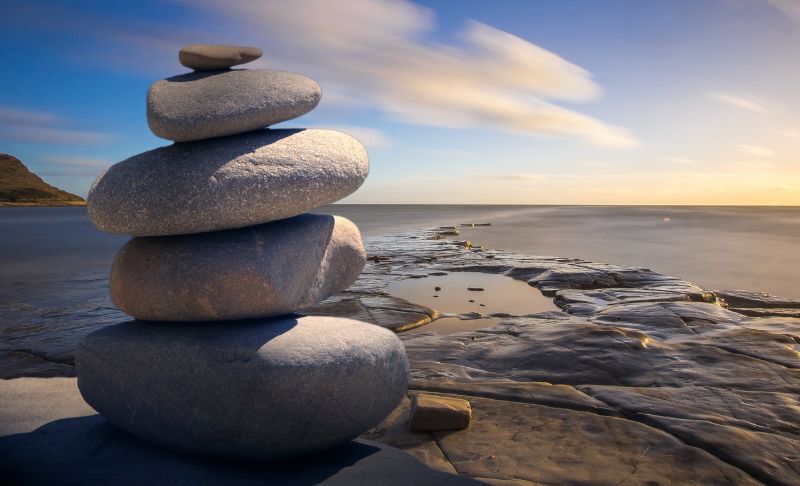
Take everything you'll need to be comfortable and pack your luggage according to the packing list provided by your retreat leaders.
Before You Continue...
Do you know what is your soul number? Take this quick quiz to find out! Get a personalized numerology report, and discover how you can unlock your fullest spiritual potential. Start the quiz now!
- Take a journal with you to jot down any ideas or insights that come to you while you're sitting.
- While you're away, bring some photos of your loved ones, beautiful stones, and little sacred things to build a mini altar.
- Bring essential oils like peppermint, wild orange, or cinnamon with you on your trip to keep your mind clear and your body grounded.
Finally, keep in mind that you don't need anything to sit and meditate, so even if you forget something, you'll still be able to enjoy a relaxing getaway. (Or even if you don't, it'll be part of the adventure!)
What do you do in a spiritual retreat?
I believe we can all agree that life is hectic, and the urge to unwind from time to time is becoming increasingly important. We're approaching Easter as I write this, which is traditionally a time of reflection for many Christians around the world. What better way to recharge your batteries than to organize your own spiritual retreat?
You don't have to spend the weekend in a retreat center. You don't even need to get out of your house. I'll offer you some examples of what I do that you can tweak to fit your needs and lifestyle.
Before I begin, I want you to know that these spiritual retreat ideas are based on my personal experience as a Christian and follower of Jesus. I've used them all my life and frequently include elements into my regular creative getaways.

How to Take a Spiritual Retreat
Get away to a peaceful location. This could indicate one of two things. You can get up early than anyone else in your house (which, in my view, means quiet!) Alternatively, you may take a stroll or drive to a more peaceful location. For spiritual retreats, I recommend staying away from coffee shops and other places where you can be distracted. Consider where you may go to incorporate nature into your vacation. Many people find nature to be relaxing. (A park, a wildlife preserve, a secluded stretch of beach, etc.)
Bring a few things, but don't overdo it. All you'll probably need is a Bible, a notebook, a pen, some water, a snack, and a devotional to guide you. If you bring too many things, you may spend the entire time sorting through them rather of thinking and praying. (Ahem, based on personal experience.)
I have a question. This question may arise during your initial reading, but it's always a good idea to enter a retreat with a notion or question in mind. What exactly do you require right now? What do you hope to gain knowledge about?
Even if it's only a rudimentary building, it's beneficial to have some structure in your hideaway. You want to feel invigorated and revived at the end of your retreat, not rushed and frustrated because you got sidetracked.
- Allow time for the words to sink in and keep a record about them. You can also use index cards to put down specific verses that you want to remember.
What should I bring to a spiritual retreat?
You've just signed up for a wellness retreat and are undoubtedly ecstatic! A health retreat has the potential to revolutionize one's life because there is so much to gain in terms of personal growth, physical and mental restoration, and limitless discovery.
I've witnessed that transition myself, having previously led a number of overseas retreats. With an open and prepared mind, anything is possible.
However, I've seen retreaters arrive physically unprepared, bringing either too much or improper gear that impedes their progress. As a result, the questions begin: What should you bring to a retreat? What do you need to bring with you? Is there anything you shouldn't bring? What exactly do you put on?
Packing Lists for Your Specific Type of Retreat
Whether you're going on a general wellness retreat, a yoga, fitness, nature, or meditation retreat, the following packing lists will help you mentally and physically prepare for your health retreat ahead.
Exercise-Specific Retreat
Bootcamp lessons, fitness courses, and/or yoga may all be part of a fitness retreat. You can either learn some new routines and exercises to take home with you, or you can go on a comprehensive wellness transformation. Here's everything you'll need for a fitness wellness retreat:

Meditation Wellness Retreat
You do nothing but sit there all day. It sounds simple, and all you need is the floor, right? No, not at all. Make sure you're packing the following items for a meditation retreat:
- Photographs of family members (especially on silent retreats, the visual connection can motivate you)
Wellness Retreat in Nature
There will almost certainly be plenty of time spent outside on a nature retreat. When you're prepared, nature may be a very healing environment for any trip experience. Nothing ruins a good time like a rash from bug bites or a sunburn. Bring the following items with you on your nature adventure:
Mental Prep
After you've prepared the physical pieces, there's one more crucial component to consider before taking off: your mentality. Here are a few pointers to help you psychologically prepare for all the wisdom to come:
Before any journey, I usually recommend that one analyzes the temperatures and upcoming weather of their location.
Also, make sure your passport is up to current, and that any tests or admission requirements are completed ahead of time. You can also get a copy of the wellness packing list I give out to all of my retreat guests after they book with me.
It's now time to start preparing for your upcoming health getaway! We hope these checklists were useful in getting you ready for your upcoming journey.
What do you do in a retreat?
Before we get into the 11 dynamic activities, let's take a look at one important mentality component. Something that you can use as a starting point when planning your next company retreat or corporate function.
Keep in mind that this is a company retreat. You want to bring people together, have a good time, get out of the office, and ensure that everyone has a pleasant experience.
It's critical to plan activities that encourage inclusion (particularly among people who don't often work together).

A Note About Remote Teams …
Remote teams are being used by an increasing number of firms to conduct critical company operations.
Is your staff mostly distributed and communicates primarily through online work tools, Slack message, or email?
You can still plan a team-building retreat that includes your remote employees.
In fact, remote teams may benefit from a retreat even more than teams that collaborate in person.
Bringing a previously dispersed team together allows for even more bonding, team-building, and mutual learning/growth as a company.
According to statistics, feelings of employee isolation can lower productivity by up to 21%. Socializing among team members, on the other hand, enhances communication patterns by more than 50%.
This is excellent news for any business. Companies who deploy a remote, off-site labor, however, will reap even greater benefits.
How do I plan a solo spiritual retreat?
Travel is my love, but after returning to the United States after years of job-related travel, going abroad didn't hold the same allure for me. In fact, something I used to like had become tough and exhausting. In addition, travel caused me to put off other goals, such as developing my travel magazine, expanding my young women's group, and finishing my book on reporting and travel.
I realized I needed a change when I found myself locked in an endless circle of work-coffee-email and couldn't stop to enjoy the activities I enjoyed or explore the other things I was passionate about.

As a result, I've finally decided to set aside some time to work on my own projects. I applied for and was awarded a grant from the Turkey Land Cove Foundation (TLC), a retreat for determined women who want to pursue their professional, educational, and artistic aspirations away from the distractions of everyday life.
I stayed at the Foundation's peaceful retreat center on Martha's Vineyard for two weeks, four miles from the nearest town and nestled down a dirt lane in the woods. I went to the beach after turning off my phone and prohibiting texting. Above all, I worked on my projects and thought about my life.
It wasn't easy for me to take this time off. It was, however, one of the most significant things I've done for my profession and for myself. Putting a stop to my travels and the rest of my life allowed me to reflect on all of the fantastic experiences I'd had, rekindle my sense of wonder and curiosity about the world, and get some work done!
So, whether it's for two weeks or just a weekend, I'd recommend it to anyone else. You may take time for yourself and build your own solo retreat anywhere in the globe by following these five steps.
What are the 12 spiritual disciplines?
Spiritual disciplines are practices that are intended to help people change their lives. Their goal is to help us grow spiritually as Christ's disciples and improve our relationship with God. They're similar to spiritual training activities. However, just like any other form of exercise, we must choose to perform it on a regular basis in order to feel or see the benefits. So, what are these practices, exactly? Consider the following lists from two of the most influential publications on the subject from the twentieth century:
Dallas Willard's The Spirit of the Disciplines: Understanding How God Changes Lives
- Abstinence disciplines include seclusion, silence, fasting, frugality, chastity, confidentiality, and sacrifice.
- Study, worship, celebration, service, prayer, fellowship, confession, and submission are the disciplines of engagement.
As you can see, there are a variety of ways to structure these lists of spiritual disciplines, as well as which disciplines are included. So, how did these practices come to be? Because they've endured the test of time, the majority of them are considered spiritual disciplines. Finally, Christians have decided to incorporate these disciplines into their spiritual lives because they are practices that Jesus himself practiced or taught about, according to the Bible.
What should I bring for meditation?
If you're just getting started with meditation or if you have back problems and find sitting on a meditation cushion difficult, a chair is a terrific option. If you're new to meditation, instead of buying a meditation cushion, I recommend sitting in a chair for the first few times. I would recommend acquiring a meditation cushion once you have made meditation a habit and are more comfortable with it; for now, utilizing a chair will help you ease into practice.
The most common thing people sit on during meditation is a meditation cushion (also known as a “zafu” and shown to the right). A meditation cushion has the advantage of allowing you to sit in an upright position, which improves your attentiveness and the quality of your meditation (and hence, how productive your sit is). You may be tempted to slouch when using a chair or a meditation bench, which can cause you to lose focus.
If you're taller than average or find sitting on a meditation cushion too unpleasant, a meditation bench is a good alternative. You'll still be forced to sit erect, and you won't be as tempted to sag as you would in a chair. Meditation benches also absorb a lot of the weight that would otherwise be applied to your legs, making it considerably more comfortable to meditate.
I recommend sitting in a chair for the first few times you meditate, and then switching to a meditation cushion (zafu) once you've gotten used to it.
A meditation cushion will keep you the most aware while your meditation, but chances are you don't currently have one. It also takes time for your body to adjust to sitting on one, which can make you sore at first. However, if you're reasonably active and healthy, I advocate using a cushion for the increased alertness it will provide.
I recommend utilizing a bench if you have leg difficulties or simply want something more comfy than a meditation cushion. If you have back difficulties, I recommend sitting in a chair but be cautious: while seats are more comfortable, they also make it easier to lose focus.
How can I make my own retreat at home?
7 Easy Steps to Creating a Wellness Retreat at Home
- Make a weekend reservation. Your at-home wellness retreat should take place from Friday evening through Sunday afternoon.