
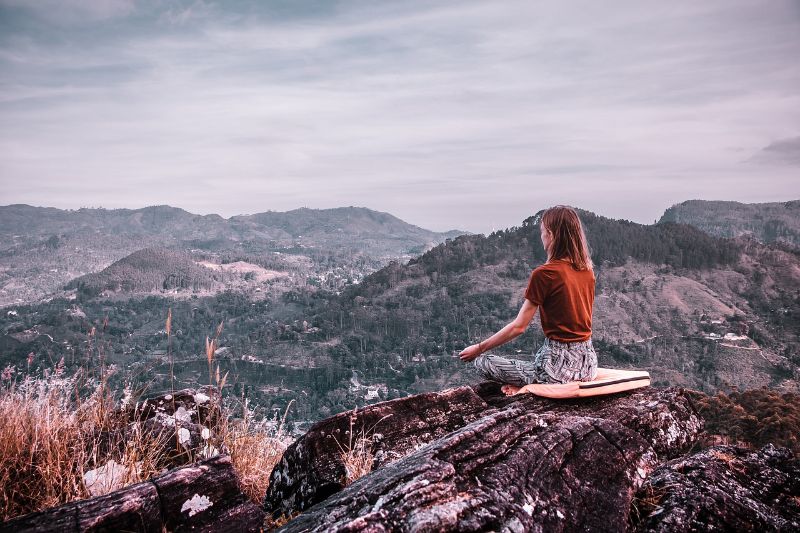
When trying to put all eight aspects of wellness together, the spiritual aspect of wellness can be the most individualized piece of the puzzle. People, on the whole, like to live lives that have meaning and purpose. When these objectives are attained, it brings peace into one's life and the lives of those around them.
Before You Continue...
Do you know what is your soul number? Take this quick quiz to find out! Get a personalized numerology report, and discover how you can unlock your fullest spiritual potential. Start the quiz now!
So, what are some things you may do to increase your spiritual well-being? It's best to experiment with several ways to see what works best for you. Spiritual wellbeing can be reached in a variety of ways, both physically and intellectually, because it involves one's values, beliefs, and purpose.
1. Examine your spiritual foundation. You are simply asking yourself questions about who you are and what you mean when you explore your spiritual core. Consider the following question: “Who am I?” What is the point of my existence? What am I most passionate about? These questions will lead you down a path where you will think more deeply about yourself and recognize aspects of yourself that will assist you in achieving fulfillment.
2. Search for hidden meanings. Looking for deeper meanings and examining patterns in your life will help you realize that you have power over your future. Knowing this can help you live a happier and healthier life.
3. Get it off your chest. It will be easier to retain a concentrated mind if you express what is on your mind. You may feel befuddled and unable to make sense of your feelings after a long day or an important event. You may be able to think more clearly and move forward if you write down your thoughts.

4. Give yoga a shot. Yoga is a physical discipline that can help you achieve spiritual wellness by eliminating mental and physical stress. Yoga is taught at all levels and can help relieve anxiety, sadness, weariness, and sleeplessness as well as reducing stress, strengthen the immune system, and lower blood pressure.
5. Take a trip. Yes, it is correct! Taking time for yourself to travel to a familiar location or to a new location can do wonders for your mental health. You will have a greater connection with yourself when your mind is able to block out distractions and assist you in reflecting and resting. This allows you to eliminate stressors and retrain your mind to focus on total wellness. Exercising, visiting with a counselor or advisor, meditation, or taking a temporary vow of silence are all activities that can be done while on a trip.
6. Keep an optimistic attitude. You will find yourself thinking differently and shifting your mind to a happy, healthy place once you begin to view things in your life in a good light. You'll discover that you're more comfortable when you eliminate negativity and re-frame how you think about specific things and situations.
7. Set aside some time to meditate. While managing your time and everyday tasks can be difficult, it is critical to make time for yourself. Take five to ten minutes each day to meditate, whether it's first thing in the morning, during your lunch break, or right before bedtime. By incorporating meditation and relaxation into your daily routine, you will be able to clear your mind and strengthen your connection to your spiritual well-being.
Source: http://student-affairs.illinoisstate.edu/health-promotion-and-wellness/7-ways-improve-spiritual-wellness/
How can I improve myself spiritually?
Religion brings spirituality to some people, but it does not bring spirituality to others. There is no one-size-fits-all approach to spiritual well-being. Here are a few ideas to get you started if you're not sure where to start.
According to a Gallup poll, 43% of Americans claim to be members of a church or other religious organization. These houses of worship provide a variety of opportunities for those living with mental illnesses to connect with others in their communities.
Reconnect with someone or an organization that shares your ideas and thoughts, whether online, over the phone, or in person. Find ways to connect with like-minded people in your religion community who can support and encourage you by reaching out to a pastor or spiritual leader.
“Many people's support mechanisms were taken away from them during the pandemicchurch, volunteering, support groups,” Wester added. “It was especially difficult for individuals who were already dealing with mental health concerns.” I advise people to reconnect with their religion group as soon as they are physically secure to do so.”

It's fine if you don't have a faith community. Finding a cause that resonates to you and giving back is another way to feel connected to your spirituality and faith. Working in a food pantry, becoming a mentor or tutor, or fostering an animal are all options. As a result, your community will develop and you will be able to meet individuals who share your interests. It will offer you a sense of purpose and thankfulness to serve others.
You don't have to be a yogi to benefit from the practice's spiritual benefits. Yoga is suitable for people of all ages and abilities. It can improve your mind and spirit, as well as strengthen and stretch your body, by lowering stress, depression, and anxiety symptoms.
You don't have to be an expert meditator like you don't have to be an experienced yoga practitioner. Because it takes so little time, meditation is one of the easiest disciplines to keep. “Some people believe you must sit and be silent, but this is not the case,” Wester explained. “You can walk while meditating, paying attention to the sensations of your feet on the ground and the intricacies of your surroundings. Simply slowing down your body can help you calm down your mind.”
Even five minutes of meditation can help you reduce stress, despair, and worry while also increasing your mindfulness. There are numerous fantastic guided meditation applications, such as Calm or Balance, if you need help.
Writing can help you process your emotions, raise your awareness, and provide a nonjudgmental space for you to express your feelings in the present. Start a daily thankfulness notebook with prompts or write down your anxieties and fears.
Spending time in nature, whether you live in the mountains, the desert, or near the ocean, can improve your spiritual health. You can't seem to get away from your phone, your day, and your problems. Even a few minutes spent watching the birds, trees swinging in the breeze, or crashing waves on the shoreline can be relaxing.
Find activities that you enjoy, such as knitting, coloring, cooking, sports, or working out. Focusing on things you enjoy might help you regain a feeling of purpose and stay present in the moment, even if only for a short time.
If you're having trouble connecting with your spiritual side or your mental health, get help from someone who is specially trained or someone you trust.
“Chaplains are specifically equipped to deal with religious issues in a clinical setting,” Wester added. They can assist validate your feelings without sweeping them under the rug. They can help you get back on track spiritually.”

How do you awaken spiritually?
Be aware of and deliberate about what you believe. Recognize the energy you're putting out into not simply your world, but the globe at large. Also, be truthful. Are your beliefs assisting you in your spiritual development? A spiritual awakening frequently necessitates the renunciation of long-held beliefs. But here's the thing about waking up: you have to realize you've been asleep first.
How can I get spiritual strength?
8 Simple Steps to Increase Spiritual Stamina and Strength
Pray for yourself so that you might achieve your bodily and spiritual goals.
What does it mean when your spiritual energy is low?
To begin with, studies reveal that you may have a harder time dealing with unfavorable life experiences. In times of adversity, spiritual people can always appeal to a higher power. The other option is to rely on social assistance, which isn't always available.
You are more inclined to develop addictions if your spiritual vitality is poor. You'll also discover that recovering from addiction is more difficult for you than it is for spiritual people. This study's findings are as follows.
They seek human help in challenging life conditions, as previously said. They don't usually take on leadership roles. They prefer to have a superior, or authority, who can provide them with assistance when needed.
People with low spirituality are often forced to embark on a desperate hunt for a life partner because of their need on another human being. They despise being alone. They may have brief relationships and switch mates frequently.
People with little spiritual vitality are less likely to aid their coworkers at work. They prioritize short-term profits over long-term goals.
How do you feed your spirits?
6 Things You Should Do to Keep Your Soul Satisfied
- It's time to talk about it. You may have been taught to say a prayer before eating, sleeping, fighting, or anything else.
How do you recognize a spiritual person?
The first evidence of a spiritual person is their lack of fear. When you have a fear or a chronic worry, that fear takes over your life and you are unable to be in the present moment. Fear of public speaking, fear of heights, and fear of bugs are the three most common fears among Americans. Many people, however, are terrified of death, rejection, loneliness, failure, illness, or making poor judgments. Spiritual people understand how to yield to forces beyond their control. In this way, they are similar to children in that they know how to ignore their minds and live fearlessly.

How do I start my spiritual work?
The spiritual journeyand the resulting “spiritual awakening” we seekalways appears to take place in some exotic location or following a spectacular incident.
Perhaps you believe you need to travel to Peru to drink ayahuasca or leave your spouse to get the spiritual awakening you seek?
From the comfort of your own home, you may connect with your spirituality and awaken to the lessons that are meant for you over and over again throughout your life.
What are the steps to spiritual growth?
There are four factors to keep in mind when addressing the dynamic of the spiritual life, according to a recent webinar on the Stages of Spiritual Growth and Freedom. She connected these ideas to one's personal growth, as well as how spiritual direction might help with this.
The Definition of the Human Person
Victoria led guests through a synthesis of Catholic teachings on the human person, beginning with an introduction to anthropology anchored on Scripture and Church Tradition. “Then God said: Let us make human beings in our image, after our likeness,” says Genesis 1:26. Man is created “Imago Dei,” in the image and likeness of God. The fact that we were made in the image and likeness of God, who is a communion of people in the Holy Trinity, is the foundation of our fundamental dignity as human beings. We are earthy creatures (i.e., we have a physical body) with a spiritual nature, implying that we were created for something more than this life. Indeed, we were created for someone greater than this life, God himself. We were made to have relationships with God and our fellow humans.
Dynamism of Holiness
In light of this anthropology, Victoria described how attaining divine beatitude, or eternal existence with God in paradise, fulfills our dignity as human beings. We are on a dynamic, though gradual, path toward relationship with God as we go through life. Victoria described how the people of the Old Testament, as well as many figures from the Gospels, experienced the journey to God in stages, based on the Scriptures. God gradually exposes himself to the people of Israel throughout redemption history, and finally fully in the Incarnation of his Son, Jesus Christ. God exposes himself to us in prayer and in our response to his grace using the same approach. Our journey to holiness is a long one, made possible solely by God's grace.
Spiritual Growth and Progression
The purgative stage, the illuminative stage, and the unitive stage are the three stages of development that make up this steady expansion. While not entirely linear, these stages tend to reflect the stages of human development: childhood, adolescence, and adulthood. In the purgative stage, a person goes through his or her initial conversion and reacts to grace by turning away from sin and pursuing virtue. A condition of remembrance is included in the illuminative stage. In fact, “recollection,” or “continuous attention of the mind and emotions of the heart to thoughts and sentiments that elevate the soul to God,” is “the primary virtue of this state.” At this point, one begins to adopt Jesus Christ's thoughts and heart. Finally, the unitive stage is characterized by a person's experience of oneness with God through love, as well as the real experience and exercise of that love. Here, prayer takes on a more meditative tone, while virtue takes on a more mature, even heroic quality. St. Maximilian Kolbe, who gave his life for another prisoner during the Holocaust, is an example of this stage. He did so with heroism, courage, and peace, as well as humility and humility, demonstrating a high level of holiness and spiritual development.
The Role and Application of Spiritual Direction
A spiritual director can be beneficial and perhaps necessary at each of these levels to support one's spiritual progress. A director can be a source of inspiration in the purgative stage, encouraging the directee to take active steps away from sin and toward virtue. A director can assist you in seeing and identifying God's hand in your life during the illuminative period. Finally, at the unitive stage, the director can assist the directee in identifying growth nuances and staying on track.
Spiritual direction is an invaluable gift in the growth of one's spiritual life. If you or someone you know is interested in becoming a spiritual director, the Spiritual Direction Certificate Program provides a combination of theological and human sciences as they apply to spiritual direction, as well as acquiring the art and skills of human interactions and supervision. Six online seminars, two four-day onsite residencies, and a practicum are included in the curriculum.