
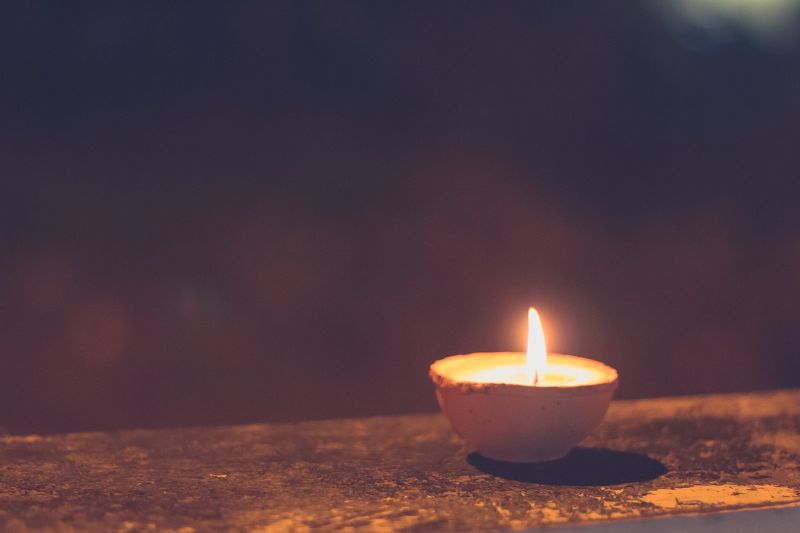
The most crucial thing to do before you start practicing is to select a comfortable spot and position. This entails avoiding as much as possible city noises and surrounding yourself with vegetation and the quiet chirping of birds. Spiritual meditation has the ability to send you to sleep swiftly. To avoid this, you must exercise extreme caution when choosing a meditation position. Choose a posture that is comfortable for you, but not one that is too relaxing and will cause you to fall asleep easily. Take a seat in Vajrasana, Padmasana, or Sukhasana. You can also sit with your back straight in a chair or stand with your back against the wall. Whatever works for you. Then gently close your eyes.
Before You Continue...
Do you know what is your soul number? Take this quick quiz to find out! Get a personalized numerology report, and discover how you can unlock your fullest spiritual potential. Start the quiz now!
Experience The Process
What do you generally do when you have an assignment to complete? You make a strategy, visualize the method in your head, and intentionally follow the pattern. That's how we've always done things. We carefully prepare and carry out each one. This, however, is not the best method to approach meditation. You'll have to let it go here. Relax and allow it to run its course in a natural and organic way. You should remain a passive observer, allowing the process to unfold naturally. Do not be concerned about the outcome or on getting it right. Allow things to take its natural course.
Acknowledge The Thoughts
We live in an information-driven world. You are constantly bombarded with new information via live updates, breaking news, and social media. As a result, your mind is constantly buzzing with fresh information and the reactions of your brain to it. It's a never-ending game while you're awake, and it's even more difficult to settle your racing thoughts while you're sleeping.
Every thought makes you react, and you end up being affected by it. Thoughts will overwhelm you even as you sit to meditation. However, the difficulty is in refusing to respond to them and enabling them to rule you. Allow thoughts to come to you naturally, but resist the desire to react to them. Allow them to drift away, allowing you to return to your meditation.
Utter A Prayer
Choose a prayer in your brain as you sit there, stopping your thoughts from defaming your calm demeanor. A prayer does not have to be religious in nature. You are free to say anything that is beneficial to you or that you enjoy. It might be a single word or a sentence. If you are a nature enthusiast, it could be something related to wildlife or something that makes you joyful. It's perhaps possible that it's a mantra.

Maintain a loose and relaxed body now. Breathe slowly and naturally. Observe your breath as it enters and leaves your body. Thoughts may obstruct your work, but you know how to deal with them. After each mental interruption, return to your body and breathing. Then, as you exhale, recall the prayer you chose. Every time you exhale, repeat it in your brain. Make use of the prayer to return your focus back to your breathing.
Reflect On Yourself
Concentrate on your body, as well as your awareness and presence in the space. Make yourself aware of your surroundings. Take note of how your body feels. Pay attention to your breathing and thoughts. Relax deeply and maintain your composure. Slowly open your eyes and sit in the same position for a while. Allow meditation's effects to seep in. Feel it, and enjoy the sensation of lightness in your body. Consider the full procedure and how you carried it out. Observe how you are less agitated than you were before the meditation. Accept that you had a natural reaction to the procedure.
What is spiritual meditation used for?
Spiritual meditation is practiced in a variety of religions and civilizations around the world.
Some people use it to relieve tension and relax, while others use it to cleanse their minds and awaken and develop their connection to something bigger than themselves.
While numerous scientific studies have looked at how meditation can help people relax, few have looked into how it might help people spiritually.
Despite this, there is a substantial amount of scientific research that explores spiritual meditation in a variety of forms.
What are the types of spiritual meditation?
The practice of mindfulness meditation entails being totally present with your thoughts. Being mindful entails being aware of where we are and what we are doing, as well as not reacting excessively to what is going on around us.
Anywhere is a good place to practice mindful meditation. Some people prefer to sit quietly, close their eyes, and concentrate solely on their breathing. However, you can choose to be mindful at any time of day, especially while driving to work or performing household tasks.
When you practice mindfulness meditation, you pay attention to your thoughts and feelings but don't judge them. (1)

What to think about while meditating?
When your mind wanders, most methods of meditation include paying attention to it and gently bringing it back to a chosen focal point. From meditation to meditation, the focal point changes. What you concentrate on while meditation might have a significant impact on your results.
So why not play around with your focus? Here are 20 new experiences to try. Check out which one(s) gives you the most powerful experience.
The Body Scan.
Pay attention to your body's physical sensations. Begin at the top of your head and gradually work your way down. Change directions and carefully climb back up once you've reached the floor.
The Present Moment.
Instead than concentrating on something external, simply concentrate on being in the present moment. Minute by moment, take in what's going on around you.
Emotional Triggers.
Retrace the origins of an emotion. What made you feel that way? Are there any unspoken emotional triggers at work here? Don't criticize yourself; instead, study your emotional triggers with kindness and curiosity.
Forgiveness.
Consider someone who has wronged you, or who you believe has wronged you. Allow yourself to feel and experience all of the emotions that come with that event, then let them go gradually. Make the decision to forgive.
The Humanity of Others.
Consider the people you know. Remind yourself that they, too, are people. They, like you, are a conscious, feeling, and thinking being. With the people around you, tap into a shared sense of humanity.
The Suffering of Others.
Being aware of the suffering of those around you might help you develop compassion. Consider the individuals in your life who are in agony, whether they are people you know or people you observe suffering who you don't know (such as the homeless in your city.) You could also consider remote people around the world, such as African children. Allow their pain to enter your life, and respond with love and compassion.
Happiness.
Concentrate on your own sense of contentment. How content are you right now? What does it feel like to focus all of your attention on your joy? How could you improve your life's sense of happiness?

The Heart of the Rose.
From “The Monk Who Sold His Ferrari,” a simple meditation. Simply focus on admiring the beauty of a rose while meditating in front of it. Take note of the color, scent, and softness of the petals, as well as the threats of the spikes. Appreciate the rose for just what it is.
Breathe in Light, Breathe Out Stress
. Focus on breathing in positive emotions like love, compassion, and inspiration as you inhale. Focus on releasing unpleasant emotions from your body, such as stress, anger, or resentment, as you exhale.
White Light
Visualizing white light is peaceful and revitalizing for many meditators. Visualize this light pouring into you or emanating from your heart through your breath.
A Conversation.
This meditation is helpful when your mind is stuck on a conversation. Allow yourself a few time to reflect on that talk. Then return your focus to the present moment. Pay attention to the thoughts, emotions, and bodily sensations that come at this point. This can assist you get rid of any residual feelings from the conversation.
Space and Expansion
Space makes up the vast majority of matter. See if you can perceive a sense of immensity, a sensation of space. After all, you're floating in space at the time. Can you imagine what that's like in the present moment, rather than as a concept?
These are 20 various methods you can concentrate your meditation. Try out the ones that appeal to you the most. Please keep us updated on your progress!
What are the 7 steps of meditation?
Meditation reduces stress, improves mental clarity, and promotes sleep, according to scientific evidence. My favorite benefit of meditation is that it allows us to listen to our intuition by quieting the monkey chatter in our heads.
We miss out on the richness of life when we are not present: the scent of our dog's fur as we hold him, the warmth of the sun on our skin, a grin from a loved one, the flavor of dark chocolate as we cherish every bite.
We stop seeking calm and serenity and understand it's right here, right now, by training our minds to live more in each present moment. Below is a seven-step strategy to getting started with meditation.

“You are living in the past if you are depressed.” You are living in the future if you are anxious. You are living in the moment if you are at ease.”
Sit upright comfortably
If you're anything like me, you'll fall asleep when trying to meditate while lying down. Instead, sit in a supportive chair with an upright back, get a meditation cushion, or fold a pillow and sit cross-legged on it.
Breathe deeply
The breath, ah, the breath, ah, the breath, ah, the breath, It serves as an ANCHOR to the current moment and a tool that may be used at any time. Begin by inhaling and exhaling slowly, counting to five on each exhale and inhale.
Allow your lungs to fill up as you inhale (a deep breath feels fantastic), then exhale gently through your nose, allowing your shoulders to drop. Repeat.
Gently close your eyes
If you haven't already done so, I recommend closing your eyes to assist you concentrate. When we're staring at our piles of laundry that need to be folded, it's tempting to let our minds wander.
Slowly scan your body, and notice any sensations
This phase is one of my favorites since it allows us to check in with our bodies. How many times a day do we inquire of others, “How are you?” “How are you doing?” Quite a bit. How often do we ask our bodies, “How many times a day?” “How are you doing?” Almost never.
It's a chance to check in with your body, which is a great approach to bring yourself into the present moment. Begin with your feet and work your way up to the top of your head.
If you notice any tension in your body, send conscious breath in the direction of that body part.
Be aware of any thoughts you are having
Do you ever get caught up in a cycle of overthinking? Here's a chance to pay attention to your thoughts without becoming enslaved by them. Assume you're the observer, and each idea is a cloud in the sky.
“I need to contact my mom, and I need to go to the grocery shop,” you could think. Allow each idea to arise and pass without judging or attaching to it.
When your mind wanders, focus on your breath
Come back to your breath when your mind wanders, which it will. The most important tool for staying grounded, connected, and focused in the moment is your breath. Your heart rate slows, your mind quiets, and your body relaxes when you concentrate on your breathing.
Gently open your eyes when you are ready
In the beginning, I recommend practicing meditation for 5-10 minutes. If you're a caffeine drinker, the optimum time to do it is first thing in the morning, before you have any coffee.
Connecting to your breath will help you start your day off right. Beyond the pillow, and throughout the day, it's a pleasant and empowering tool to use.
You can practice mindful breathing even if you don't have time to close your eyes during a meeting, a traffic jam, or a chat. One of these amazing meditation breaks can help you find inner serenity.
How do I awaken my spiritual power?
Seven Ways to Boost Your Spiritual Well-Being
- Examine your spiritual foundation. You are merely asking yourself questions about who you are and what you mean when you explore your spiritual essence.
Is meditation a sin?
In reality, God commanded Joshua to reflect on His word, as you can see in the text above. Many Christians engage in Scripture meditation. The goal is to remove all other distractions and focus solely on God's word in order to hear what God has to say. It causes a person to become more aware of their surroundings and permits the Holy Spirit to communicate with them.
How do you know if you are meditating?
to do you eagerly anticipate it. Let's be honest: we sometimes only go to the gym or go for a run because we feel obligated to. When you first start meditating, it can feel like that. However, as time goes on, you'll realize that you look forward to this time and even require it to recharge. As you seek serenity and contentment, you'll find yourself turning to meditation frequently throughout the day.
What should you not do while meditating?
I don't know about you, but when I'm told I need to practice anything, I get defensive. For example, when I was a kid and told I had to practice the piano, I hated it. So it's no surprise that all this rhetoric about how great mindfulness is makes me squirm.
Despite this, something keeps dragging me back. I've studied enough, attended enough workshops, and practiced long enough to know it works. It won't heal everything, but as Dan Harris of Good Morning America claims in his new book, it can make you 10% happier.
Here are a few pointers that have helped me make mindfulness meditation work for me. They all came out in the manner of “don't do this” for some reason. I guess my resistance machine isn't interested in taking a break. Regardless, I hope you find these suggestions helpful.
1. Avoid being kidnapped. Focusing on your breathing is one of the most common methods of mindfulness education. You return your attention back to the breath when it wanders. It's a graceful method to learn to concentrate your thoughts. Isn't it simple? It's not difficult, but it's not simple.
It doesn't take long for us to lose track of our breath and become enslaved by our thoughts and emotions. This does not imply that you are doing something incorrectly; in fact, it happens to everyone. The goal is to gradually bring your attention back to your body and breath. Simply acknowledge a thought or emotion as it arises, but then let it go.
Don't berate yourself if your mind wanders. The “golden moment,” according to meditation guru Sharon Salzberg, is when you realize your mind has wandered. It's the time when you have the opportunity to do things differently; when you may be kind with yourself and simply begin anew.
2. Do not bring a firearm. My subheadings have a dramatic tone to them! I recently listened to a podcast by Tara Brach. She related a story about Diane Fossey, a prominent gorilla researcher who studied the inner workings of gorilla communities in Rwanda. Ms. Fossey was once asked how her team of researchers had accumulated so much more data than previous groups. “We didn't bring guns,” Ms. Fossey apparently said. When humans were there out of genuine and compassionate inquiry, the gorillas could sense it. When we are studying the contents of our own minds, we must be like this. We must approach ourselves with tenderness and not with the goal of passing judgment.
3. Don't expect a certain result. Expect no guarantees or even that you'll complete all of the steps when you're doing a certain mindfulness exercise. RAIN, for example, is a popular mindfulness activity. Recognize, allow, investigate, and non-identification are the letters in the acronym. I won't go over the entire exercise (you can read about it here), but just getting to the point where you halt and realize what's going on is enormous. It makes me think of a famous Victor Frankl quote: