
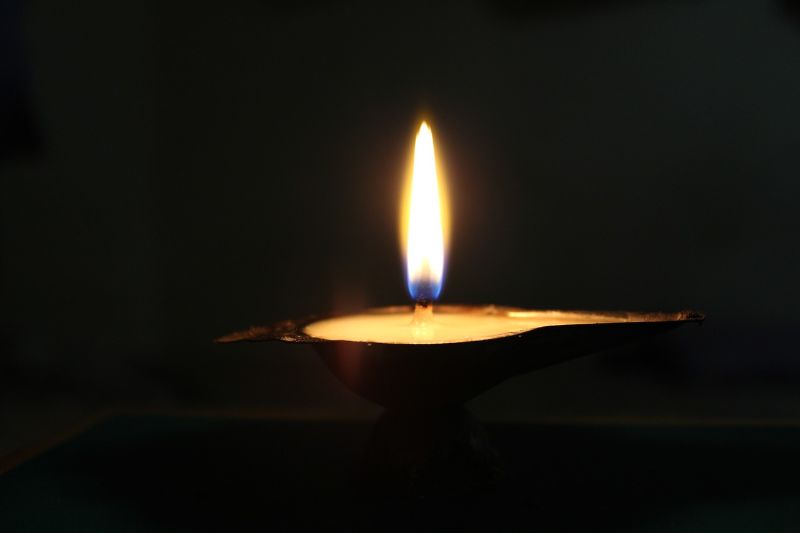
Because of the daily stresses that many of us face, sacredspaces are becoming increasingly important in our daily lives. Finding a specific spot where you can relax, contemplate, and feel peace can be an important part of your self-care and health regimen.
Before You Continue...
Do you know what is your soul number? Take this quick quiz to find out! Get a personalized numerology report, and discover how you can unlock your fullest spiritual potential. Start the quiz now!
You've probably heard the expression “home is where the heart is,” which means “home is wherever our loved ones are.” It can also be read as “home is where the heart is,” because our hearts are filled with happiness, wonderful memories, love, and comfort while we are at home.
Most of us aim to make our homes feel warm and inviting, as well as to provide a setting where we may cultivate happiness and create shared memories with our loved ones. This is a beautiful thing since it nourishes and improves our interpersonal ties.
However, we frequently miss creating room for our relationship with ourselves with the same care and attention.
I advise you to think about making your home a relaxing and nurturing getaway for your inner life as well as a pleasant location for your outward self.

When we're alone with ourselves, our inner life might be characterized as the thoughts, emotions, sentiments, and intentions that occupy our minds. When it comes to generating comfort in our living places, our inner lives require just as much care and attention.
Creating holy space in your house a place where you can connect with your inner self is one of the finest ways to do this. You can connect with your inner self in a variety of methods, including meditation, self-reflection, journaling, yoga, and prayer, to mention a few.
In today's post, we'll go over some of the actions you may take to make sacred spaces in your house. I'll also provide some ideas and suggestions for how you might use sacred spaces to find more inner calm and connection in your everyday life.
Below, we'll go over what a holy place is, why it's important to establish one, and how you may make your own sacred area in your house.
What does it mean to create a sacred space?
Simply put, sacred space is a place you create that makes you feel connected, safe, and at ease. It's a spiritual environment where you may find self-care items and techniques.
I refer to self-care as sacred since it is a non-negotiable component of my life for me. It's more than just painting my nails or giggling while I dance around a room once a month, as many articles and books for women recommend.
Decide Your Altar's Purpose
Aside from comfort and convenience, secular altars have few requirements. If you're creating a meditation space, all you need is a comfortable location to sit or lay down. If you're going to use your altar for reading and journaling, it'll need to have a place to keep your books and pens, as well as be well-lit.
Choose a Space for Your Altar
It can be as large as a spare room or as small as a bookshelf or a windowsill.
You should also think about the cardinal direction your altar faces. Some Christian groups, for example, position altars on the eastern side of the church to symbolize the rising sun and resurrection. You may also want your altar to face a direction that is special to you at home. Some people place their altars facing the direction of their motherland and ancestors.

If erecting a fixed altar in your home seems impractical right now, keep reading to the end of the post, where I provide a fun and ingenious suggestion for creating a pocket altar that is both movable and unobtrusive.
Consider a peaceful location with some seclusion. If you live with others, attempt to choose a spot that won't get in the way of others or be easily knocked over.
Examine whether the area is suitable for your requirements and feels ‘right'. Is it or can you make it calm, tranquil, and private? Is the energy in the room clear, bright, and friendly?
You can energetically ‘clear' the location you chose by burning incense or essential oils if you want to add a little enchantment.
If you're interested in doing a smoke cleanse (using white sage smudge sticks), make sure you get your herbs from Native American and Indigenous vendors. Many Native American countries regard smudging to be sacred medicine, and practice was illegal in the United States until 1978.
Gather Tools and Objects for Your Altar
Collect any tools or objects you'd like to keep on your altar using your intuition. Gather anything that speaks to your heart and'sparks joy,' as Marie Kondo would say, unless you're pursuing a certain spiritual path with precise restrictions on what to include.
- Photographs of your forefathers and mothers (when showing images of the deceased is appropriate in your culture)
- Souvenirs and memorabilia from significant spiritual or political turning points (e.g., an object from your first rally, a gift from a mentor, etc.)
- Flowers and plants (especially if the altar intends to reflect and celebrate the changing seasons)
- A shot glass of bourbon, fruits, or a little dish of rice and grains are examples of food offerings.
- Tarot cards, runes, oracle cards, or a crystal ball are examples of divination equipment.
What you keep on your altar has no criteria or limitations. You should never feel obligated to purchase altar accoutrements or believe that your altar isn't ‘complete' until it includes a cauldron, censer, chalice, wand, crystals, eighteen pillar candles in various colors, and other such items.
If you've never kept an altar before, I recommend starting simply with a single candle and a photograph of someone who represents something you want to grow more of in your life.
If and when it feels right to you, you can gradually add to your altar throughout the weeks, months, and years.

Arrange Your Altar
After you've cleansed your altar space (physically and/or spiritually), consider how you'd want to arrange the precious things you've collected on your altar.
Simple is better here, as having fewer artifacts will make it easy for them to find a place on your new altar.
If you want to protect the surface of your altar from incense ash or candle wax, start by laying down an altar cloth or a plate.
Many spiritual practices for altar building follow the rule of symmetry. Consider starting with the largest or tallest item and working your way outwards. You can also use plants/flowers, candles, and photos to symbolically match your favorite thing in the middle.
Work With Your Altar
If you're overwhelmed, starting with only one modest ritual per season is perfectly acceptable. Perhaps you clean and repaint your altar at the start of each season, putting out objects that signify the new season. For example, in the spring, you may put out a vase of fresh flowers, in the summer, sand and seashells, in the fall, pumpkins, and in the winter, holly and white candles.
Consider spending at least five minutes a day or fifteen minutes a week at your altar to meditate, journal, or set intentions if your goal with your altar is to build a more frequent practice of spiritual self-care.
My new moon and full moon rituals are two activities you can begin conducting at your altar every lunar cycle to give yourself time to check in with yourself.
The more you use your altar, the more it will become a sacred focal point in your daily life, amplifying warm, wonderful vibes throughout your house.
Because we all exist in the same universe, it's important to remember that we're all the same behind the layers of race, color, and gender. The gift of stars has been bestowed upon you.

How do I create a sacred space in my bedroom?
Look for inspiration in the things you enjoy. Choose items that energize you, inspire you, or assist you in entering the ritual of your meditation, yoga, prayer, or other spiritual practice. To make your sacred area feel more enclosed, soothing, and personal, consider utilizing a screen, curtain, or other boundary.
How can I make my house spiritual?
5 Ways to Make Your Home a Spiritual Sanctuary
- Make Cozy Corners and Spots in Your Home There are numerous ways to transform your home into a peaceful spiritual haven.
How do you practice self care and spirituality in your space?
Another strategy to develop a spiritual self-care practice is to immerse yourself in a group that shares your values. You give yourself an opportunity to develop your connection to your truest self when you surround yourself with like-minded persons you respect and admire.
For me, the yoga community (particularly Kundalini) is a wonderful method to connect spiritually with myself in a safe environment. Churches, synagogues, drum circles, sound bowl gatherings, and healing circles are examples of spiritual groups.
Find a trusted mentor or advisor
Your spiritual self-care doesn't have to be a one-on-one experience. While much of the work is done on your own, it may be helpful to find a spiritual mentor or counselor to support you and answer any questions you may have.
If you're not sure where to look for a spiritual counselor, look around your neighborhood or talk to a life coach who can steer you in the proper place.
Experiment with crystals, tarot cards, and other spiritual tools
Crystals, sound bowls, gongs and bells, tarot cards, and essential oils are just a few of the spiritual instruments you can begin to incorporate into your life. These resources can assist you in developing a self-care ritual or practice, but they aren't required for spiritual self-care.
What are some examples of sacred spaces?
The following works of art were picked from a wide range of civilizations and belief systems, and were chosen precisely because they are among the most widely studied and taught architectural masterpieces. Focusing on the suggested themes given above might help you stay on target.
- Teotihuacan Culture, Mexico, 150225 AD, Sun Pyramid and Temple of Quetzalcoatl (Feathered Serpent).
- Circumambulation: the ritualistic act of walking around anything precious.
- crucifixion: a person's execution by nailing them to a cross, as Jesus was.
- During Byzantium, the Iconoclastic Controversy (Byzantine Iconoclasm) involved the removal of sacred imagery in order to avoid idolatry (726-787 and 814-842)
- In Shinto belief, kami are spirits who are nature, animals, or ancestors.
- A minaret is a tower, usually seen in a mosque, from which the faithful are summoned to pray.
- Sacred things associated with a holy person, such as a bodily part, jewelry, or a piece of clothing, are known as relics.
How do you set up a meditation altar?
Create Your Own Meditation Altar by Following These 7 Steps:
- Figure out why you're doing it. Before you begin, keep in mind that assembling the parts of your meditation altar can easily become a meditation in itself.
Where should you place an altar in your house?
A solid foundation is required for any home altar. Feng shui altars are traditionally made of wood, but any firm foundation would suffice. Typically, a shelf, table, mantle, or desk are excellent possibilities. Some Feng Shui practitioners believe that the altar should always be over your shoulders, but if you're using it for meditation, it's more practical to have it closer to the ground, so altars that are hip-height or knee-height can suffice.
When should I raise my altar?
You are supposed to build an altar whenever God reveals Himself to you. Whenever God speaks to you in a dream or in any other way, you must secure those blessings by going straight to your established altar or by erecting an altar at that location and sealing the revelation with a sacrifice offering. You can make a promise by sacrificing your money, your time, your food, your worship, and so on. But, for the love of God, do anything. Allowing that divine visitation to pass you by without making the most of it is a mistake. As a result, it isn't a physical altar.
When God's angel appeared to Manoah and her husband, Sampson's parents, they wasted no time in erecting an altar and offering a sacrifice: (Jud. 13:19). When Gideon had an angelic experience, he did the same. “Depart not, I implore thee, until I return unto thee and bring forth my present, and lay it before thee,” he said to the angel. (Judges 6:18a & 6:19a & 6:19a & 6:19
Every morning, Jesus, our forerunner, went to His customary spot of prayer on the Mount of Olives. That was His own private altar. He had constant open heavens as a result of everyday visitation to His altar (Mk.1:35).