
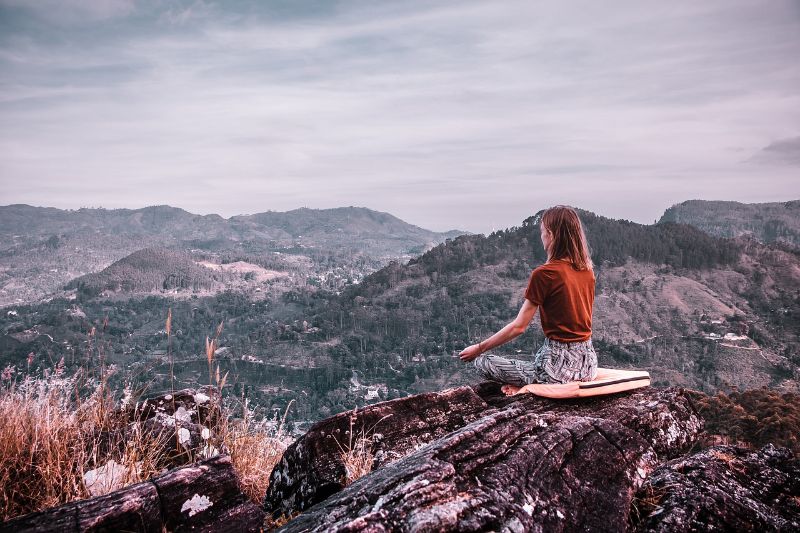
Spirituality is a topic that is frequently discussed, but it is frequently misinterpreted. Many individuals confuse spirituality and religion, and as a result, they bring their religious ideas and prejudices into debates about spirituality. Although spiritualism is emphasized in many religions, you can be “spiritual” without being religious or a member of an organized religion.
Before You Continue...
Do you know what is your soul number? Take this quick quiz to find out! Get a personalized numerology report, and discover how you can unlock your fullest spiritual potential. Start the quiz now!
What does it mean to be spiritual but not religious?
“Spiritual but not religious” (SBNR), sometimes known as “spiritual but not affiliated” (SBNA), is a popular phrase and initialism used to describe a spiritual life perspective that does not see organized religion as the only or most valuable source of spiritual growth. Historically, the terms religious and spiritual have been used interchangeably to express all components of the notion of religion, but in modern usage, spirituality has come to be connected with the individual's interior existence, emphasizing the “mind-body-spirit” well-being.
How can I increase my spirituality?
Religion brings spirituality to some people, but it does not bring spirituality to others. There is no one-size-fits-all approach to spiritual well-being. Here are a few ideas to get you started if you're not sure where to start.
According to a Gallup poll, 43% of Americans claim to be members of a church or other religious organization. These houses of worship provide a variety of opportunities for those living with mental illnesses to connect with others in their communities.
Reconnect with someone or an organization that shares your ideas and thoughts, whether online, over the phone, or in person. Find ways to connect with like-minded people in your religion community who can support and encourage you by reaching out to a pastor or spiritual leader.

“Many people's support mechanisms were taken away from them during the pandemicchurch, volunteering, support groups,” Wester added. “It was especially difficult for individuals who were already dealing with mental health concerns.” I advise people to reconnect with their religion group as soon as they are physically secure to do so.”
It's fine if you don't have a faith community. Finding a cause that resonates to you and giving back is another way to feel connected to your spirituality and faith. Working in a food pantry, becoming a mentor or tutor, or fostering an animal are all options. As a result, your community will develop and you will be able to meet individuals who share your interests. It will offer you a sense of purpose and thankfulness to serve others.
You don't have to be a yogi to benefit from the practice's spiritual benefits. Yoga is suitable for people of all ages and abilities. It can improve your mind and spirit, as well as strengthen and stretch your body, by lowering stress, depression, and anxiety symptoms.
You don't have to be an expert meditator like you don't have to be an experienced yoga practitioner. Because it takes so little time, meditation is one of the easiest disciplines to keep. “Some people believe you must sit and be silent, but this is not the case,” Wester explained. “You can walk while meditating, paying attention to the sensations of your feet on the ground and the intricacies of your surroundings. Simply slowing down your body can help you calm down your mind.”
Even five minutes of meditation can help you reduce stress, despair, and worry while also increasing your mindfulness. There are numerous fantastic guided meditation applications, such as Calm or Balance, if you need help.
Writing can help you process your emotions, raise your awareness, and provide a nonjudgmental space for you to express your feelings in the present. Start a daily thankfulness notebook with prompts or write down your anxieties and fears.
Spending time in nature, whether you live in the mountains, the desert, or near the ocean, can improve your spiritual health. You can't seem to get away from your phone, your day, and your problems. Even a few minutes spent watching the birds, trees swinging in the breeze, or crashing waves on the shoreline can be relaxing.
Find activities that you enjoy, such as knitting, coloring, cooking, sports, or working out. Focusing on things you enjoy might help you regain a feeling of purpose and stay present in the moment, even if only for a short time.
If you're having trouble connecting with your spiritual side or your mental health, get help from someone who is specially trained or someone you trust.
“Chaplains are specifically equipped to deal with religious issues in a clinical setting,” Wester added. They can assist validate your feelings without sweeping them under the rug. They can help you get back on track spiritually.”
How do you get closer to God without religion?
YouTube has more videos.
- Meditation is any practice that aids in the quieting of the mind and the opening of it to God.
- Random acts of kindness: It's true that kindness makes the world a better place.
Can you believe in God but not religion?
The emergence of the “Nones,” a generic phrase for people who do not identify with a specific faith, has been one of the most significant stories in American religion for more than a decade. The religiously unaffiliated currently account for just over a quarter of the population in the United States.
While agnostics and atheists are included among the Nones, the majority of those who fall into this category believe in God or a higher force. Many people identify as “spiritual but not religious,” or “SBNR,” according to academics.
As a theology professor at a Unitarian Universalist and multireligious seminary, I come across a lot of students who meet the SBNR profile. They're studying to be chaplains, interfaith ministers, and social activists, among other things. However, they may be astonished to learn how much they resemble certain Protestants from five centuries ago, particularly those of Martin Luther's so-called radical reformers.
Is manifesting a sin?
If you're trying to materialize something great, like a new home, a romance, or a new job, manifesting isn't a sin.
If you strive to generate something negative that will harm someone else, however, you are committing a sin.
Even if you aren't religious, you should never strive to generate something negative since it will “bite” you in the end.
You will always get back what you put into the world, so if you want to be a better person and have more positive things in your life, don't try to create anything negative.

What are the 3 elements of spirituality?
In their eternal wisdom, all shamans, healers, sages, and wisdom keepers of all centuries, continents, and peoples claim that human spirituality is made up of three aspects: connections, values, and life purpose. These three components are so strongly linked that it may be difficult to tell them apart. Take a minute to ponder on each facet of human spirituality to determine the state of your spiritual well-being if this is possible. This will be a three-part monthly series, starting with relationships.
Internal (your domestic policy)how you deal with yourself, how you nurture the relationship with yourself and your higher selfand external (your foreign policy)how you relate, support, and interact with those people (and all living entities) in your environmentare the two categories of relationships.
What criteria would you use to assess your internal relationship, and what steps could you take to improve it?
How would you assess your external relationships, shifting from the perspective of domestic policy to international policy?