
Aside from comfort and convenience, secular altars have few requirements. If you're creating a meditation space, all you need is a comfortable location to sit or lay down. If you're going to use your altar for reading and journaling, it'll need to have a place to keep your books and pens, as well as be well-lit.
Before You Continue...
Do you know what is your soul number? Take this quick quiz to find out! Get a personalized numerology report, and discover how you can unlock your fullest spiritual potential. Start the quiz now!
Choose a Space for Your Altar
It can be as large as a spare room or as small as a bookshelf or a windowsill.
You should also think about the cardinal direction your altar faces. Some Christian groups, for example, position altars on the eastern side of the church to symbolize the rising sun and resurrection. You may also want your altar to face a direction that is special to you at home. Some people place their altars facing the direction of their motherland and ancestors.
If erecting a fixed altar in your home seems impractical right now, keep reading to the end of the post, where I provide a fun and ingenious suggestion for creating a pocket altar that is both movable and unobtrusive.
Consider a peaceful location with some seclusion. If you live with others, attempt to choose a spot that won't get in the way of others or be easily knocked over.

Examine whether the area is suitable for your requirements and feels ‘right'. Is it or can you make it calm, tranquil, and private? Is the energy in the room clear, bright, and friendly?
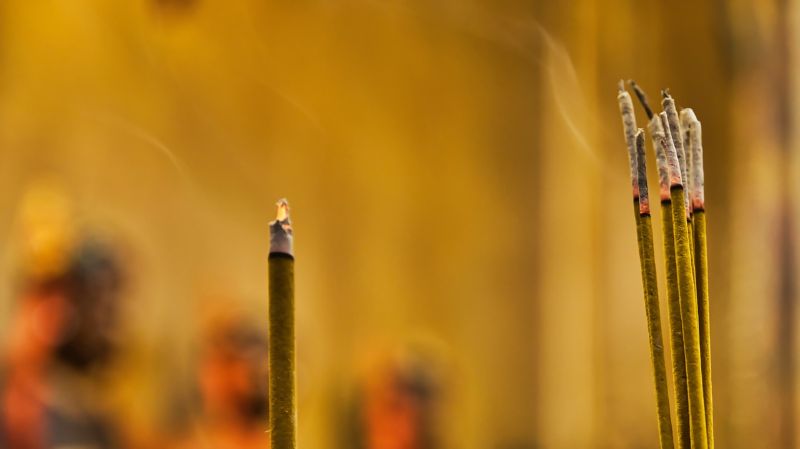
You can energetically ‘clear' the location you chose by burning incense or essential oils if you want to add a little enchantment.
If you're interested in doing a smoke cleanse (using white sage smudge sticks), make sure you get your herbs from Native American and Indigenous vendors. Many Native American countries regard smudging to be sacred medicine, and practice was illegal in the United States until 1978.
Gather Tools and Objects for Your Altar
Collect any tools or objects you'd like to keep on your altar using your intuition. Gather anything that speaks to your heart and'sparks joy,' as Marie Kondo would say, unless you're pursuing a certain spiritual path with precise restrictions on what to include.
- Photographs of your forefathers and mothers (when showing images of the deceased is appropriate in your culture)
- Souvenirs and memorabilia from significant spiritual or political turning points (e.g., an object from your first rally, a gift from a mentor, etc.)
- Flowers and plants (especially if the altar intends to reflect and celebrate the changing seasons)
- A shot glass of bourbon, fruits, or a little dish of rice and grains are examples of food offerings.
- Tarot cards, runes, oracle cards, or a crystal ball are examples of divination equipment.
What you keep on your altar has no criteria or limitations. You should never feel obligated to purchase altar accoutrements or believe that your altar isn't ‘complete' until it includes a cauldron, censer, chalice, wand, crystals, eighteen pillar candles in various colors, and other such items.
If you've never kept an altar before, I recommend starting simply with a single candle and a photograph of someone who represents something you want to grow more of in your life.
If and when it feels right to you, you can gradually add to your altar throughout the weeks, months, and years.
Arrange Your Altar
After you've cleansed your altar space (physically and/or spiritually), consider how you'd want to arrange the precious things you've collected on your altar.
Simple is better here, as having fewer artifacts will make it easy for them to find a place on your new altar.

If you want to protect the surface of your altar from incense ash or candle wax, start by laying down an altar cloth or a plate.
Many spiritual practices for altar building follow the rule of symmetry. Consider starting with the largest or tallest item and working your way outwards. You can also use plants/flowers, candles, and photos to symbolically match your favorite thing in the middle.
Work With Your Altar
If you're overwhelmed, starting with only one modest ritual per season is perfectly acceptable. Perhaps you clean and repaint your altar at the start of each season, putting out objects that signify the new season. For example, in the spring, you may put out a vase of fresh flowers, in the summer, sand and seashells, in the fall, pumpkins, and in the winter, holly and white candles.
Consider spending at least five minutes a day or fifteen minutes a week at your altar to meditate, journal, or set intentions if your goal with your altar is to build a more frequent practice of spiritual self-care.
My new moon and full moon rituals are two activities you can begin conducting at your altar every lunar cycle to give yourself time to check in with yourself.
The more you use your altar, the more it will become a sacred focal point in your daily life, amplifying warm, wonderful vibes throughout your house.
Because we all exist in the same universe, it's important to remember that we're all the same behind the layers of race, color, and gender. The gift of stars has been bestowed upon you.
What is an altar in spirituality?
The word altar comes from the Latin word altar, which means “high place,” indicating how sacred and significant it is in spiritual practice.
Altars are found in practically every religion and culture, and they can be formed of man-made or natural materials.

Altars can be used for contemplation, ritual, prayer, reflection, thankfulness, or any other form of interior activity in the spiritual, esoteric, and metaphysical senses.
Meditation altars can be tiny or vast, elaborate or simple, traditional or unconventional. Your altar's flavor, appearance, and feel will be determined by your personal interests and preferences.
Most importantly, because you are the one who will be interacting with your altar, it must look and feel real to your requirements.
What are the 4 things found on a home altar?
A home altar, also known as a family altar, is a shrine used for Christian prayer and family worship that is kept in the house of a Western Christian family. A cross or crucifix, a copy of the Bible (especially a Family Bible), a breviary and/or other prayer book, a daily devotional, icons of Jesus Christ, and prayer beads, among other religious articles specific to the individual's Christian denomination, such as images of the saints for Catholics, the Small Catechism for Lutherans, and the Anglican Rosary for Anglicans, are common items found on home altars.
Where should you place an altar in your house?
A solid foundation is required for any home altar. Feng shui altars are traditionally made of wood, but any firm foundation would suffice. Typically, a shelf, table, mantle, or desk are excellent possibilities. Some Feng Shui practitioners believe that the altar should always be over your shoulders, but if you're using it for meditation, it's more practical to have it closer to the ground, so altars that are hip-height or knee-height can suffice.
What are the seven levels of an altar?
Every year on November 2nd, Mexico commemorates Dia de Los Muertos, or Day of the Dead, a celebration that is one of our culture's most enduring symbols. Going to the cemetery where loved ones are laid to rest and paying tribute to them with elaborate altars is usually part of a day's activities.
Altars represent a people's beliefs; they are a physical representation of their attitude toward death. The concept that the deceased's spirit returns to the world of the living to console them for their loss gives them their significance.
Altars are divided into two to seven levels, each with its own set of symbols. Heaven and earth are represented by two-level altars, with a third level added to represent purgatory. The seven levels reflect the seven steps that must be taken to reach paradise.
- Dedicated to the souls who are trapped in purgatory. The images are put so that the deceased can quickly leave purgatory if they end themselves there.
- A cross composed of seeds or fruits, symbolizing the ceremony's religious beliefs.
Incense, candles, water, alcoholic beverages, and marigold flowers are some of the most frequent offerings during Dia de los Muertos. The pan de muerto (special bread cooked for the day), sugar skulls, and colorful cut paper decorations are unquestionably the three most important aspects.

The origins of the bread of the dead can be traced back to pre-Hispanic times, when men sacrificed princesses' hearts and placed them in pots with amaranth. They'd then bite them to express gratitude to the gods for excellent harvests or the ability to overcome the adversary.
The conquering Spaniards did not completely accept these customs; instead, they invented an anatomical heart-shaped bread to reflect the rite, which they covered in red sugar to simulate blood. The skull is represented by the circle in the middle, while the bones are represented by the lines on the bread's sides.
Another common practice was to offer a sacrifice to the gods “tzompantli” is an altar with a string of skulls. Sugar skulls created from alfeique, a Spanish cane sugar confection, were used by the Spanish to modify this tradition.
Sugar, hot water, and a little lemon juice are used in the traditional Mexican dish. The mixture forms a putty that is poured into a mold and shaped into a skull. The eyes and a smile are then added with colored icing sugar.
This traditional decorative art expresses happiness via the use of colors, each of which has its own meaning.
These well-known “Tissue paper is used to construct “small flags,” which may be made in a variety of ways and designs.
How do I activate my altar?
You've finished building your Altar. You could be a seasoned Priestess or ceremonialist, or this could be your first time. Always keep in mind that we all have the ability to connect to Life and Source and to produce beautiful sacred energies. In front of your Altar, take a moment to contemplate. Take it all in, what you've made. Take a deep breath and gaze at the symbols, feeling the energy and force of the physical manifestation of your prayers and aspirations. Activate your Altar by speaking your intentions aloud, calling forth your teachers and guides, or any Spiritual Archetypes you resonate with, lighting a candle, striking a bell, and imagining a gateway of energy opening above the Altar, bringing pure divine energies into your room. Create new steps to the ceremony using your instincts. You could include the following:
Taking photos and writing out a description of your Altar in your journal. Please share your images and writings with me! I'd like to know and keep track of your intentions! You can leave a remark in the section below.
While the Altar is up, you can begin to activate the Altar and your intentions, and add to them as you wish day by day.
Above all, have fun and know that you're connecting to everything in a beautiful way.
What are altars decorated with?
The Day of the Dead ( “The Day of the Dead”) is a Latin American tradition that is most strongly associated with Mexico. The indigenous peoples believed that a person's soul did not perish when they died, and that it continued to live on in Mictlan, a place of rest. This pre-Hispanic ceremony eventually blended with the Catholic All Souls Day celebration, resulting in the modern-day Da de los Muertos feast.
Death is now seen as a transfer from one life to another, and the Dia de los Muertos celebration is a moment for living people to communicate with those who have passed away. It is thought that the deceased's soul will pay a visit to the home where he or she formerly resided. It is a joyful, colorful festival in which the deceased are remembered and invited back to share in the delights of living.
Altars known as ofrendas may be found all throughout Mexico “Offerings”) are placed in homes to welcome the souls of the deceased back home. Marigolds (the flower of the dead), favorite delicacies such tamales, tortillas, pumpkin, and mole, candles, incense (copal), toys and other enticements, and personal belongings are also used to decorate home altars. A path of flower petals may lead the souls to their home altars in some cases.
Offerings, representations and their meanings:
- The crop is a representation of the Earth. The perfume of the harvest nourishes the soul. The scratch and seed on the altar feed the quail and birds.
- The Wind a fast-moving object that represents the wind. Wind is represented as tissue paper (our papel picado).
- Water – placed in a jar for the souls to drink after their lengthy journey to the altar to quench their thirst.
- Wax candles are used to depict fire. A lit candle represents each soul, with an extra one set for the forgotten soul.
- Marigold (cempasuchitl) flowers scattered at the house's entryway, forming a path to the altar.
- Mat or rug – put at the foot of the altar to provide a resting place for the soul after its long trip home.
- Papel Picado is a specific type of paper that is cut into the shape of butterflies and other symbols. Wind is represented by this character.
- Butterflies – a symbolic sign expressing the idea held in some parts of Mexico that after a person dies and enters eternal life on November 2nd, their soul returns to earth as a butterfly to visit their loved ones.
The ofrendas are a memorial to the departed, a reminder that life is eternal and that the presence of a loved one who has passed away remains forever. The ofrendas symbolize love for life while also expressing affection for the deceased.
Altars are usually built on the 30th and 31st of October and taken down on the 2nd of November. On October 31st, altars stocked with their favorite meals and toys are placed out, as it is thought that the spirits of children return earliest. The spirits of deceased adults arrive on November 1st, and in preparation for their arrival, extra spicy foods, as well as other worldly delicacies such as fruits, nuts, chocolate, and liquor, are placed on the table. The foods, flowers, and incense are spicy and aromatic since the souls can only enjoy the fragrances of these offerings. Later, friends and family gather for a feast.
The Desert Museum has erected a typical Da de los Muertos altar in honor of the Da de los Muertos custom, which spans Mexico and continues into the Sonoran Desert region. Each hamlet in Mexico has its own festivities and altars for Da de los Muertos, which are based on their local traditions. We want to honor conventional Da de los Muertos themes while making them distinctive to our organization and history here at the Museum.
This year's theme will be to honor the animals and plants that contribute to the Museum's and the Sonoran Desert's uniqueness. Assist us in decorating an altar devoted to the monarch butterfly, whose winter visit in central Mexico has traditionally been associated with the souls of the fallen. Photographs and other remembrances from museum departments have been added to our community altar. Remembrances of animals that are no longer alive but were formerly part of the Desert Museum's collection, as well as endangered or extinct animals and flora from the Sonoran Desert region, are among the offerings.
From Friday, September 29th until Monday, November 6th, the altar will be open to the public and will be available for earthly visiting for those who have passed away. Traditional Da de los Muertos offerings include marigolds, candles, papel picado, sugar skulls, pan de muerto (bread of the dead), the Virgin of Guadalupe (Mexico's patroness), and other symbolic offerings, in addition to our offerings.
What does an altar symbolize?
Although churches differ in size, style, and architecture, practically every Christian church has one characteristic in common: the altar. The altar is certainly one of the most essential components of a church, but how many people think about what the altar represents or how it came to be such an important part of church services when they go to church on Sunday? The altar is sometimes misunderstood as merely a piece of church furniture, but it is actually as much a symbol as it is a religious component. Matthew F. Sheehan is here to explain what the altar represents to people who are unsure.
The altar, also known as “God's table,” is a hallowed space in any church. It's a place where people can make sacrifices and presents to God. It is also from here that the Eucharist is celebrated. The Latin words altrium and adolere, which mean “high” and “to ritually burn or sacrifice,” respectively, are the origins of the word altar. According to the descriptions provided in the Bible, this was the altar's original purpose.
In the Bible, the first altar is mentioned. When Abraham lands at Moreh, according to legend, God appears to him again, prompting him to erect an altar. This was Abraham's first altar, and the Bible says that in order to live a life of faith, one must first build an altar. While most of us don't have our own altars at home, practically every church has one in the front. The altar belongs to everyone in the congregation who is a member of the church. Traditionally, the act of erecting an altar entails offering God everything we are and everything we own. On the altar, we can place everything we cherish or love.
After constructing his altar, Abraham placed his possessions on it and torched them. The altar serves as a physical reminder that we don't need to hoard anything. It serves as a reminder that our lives on this planet are for God and God alone. Our mission is to serve others rather than to amass wealth. We place everything on the altar because we are here for God. It serves as a reminder that material possessions have no importance in life, whereas trust in God and living a good life are our true goals. Consider this the next time you pass by your local church's altar.
The altar in modern churches is more symbolic than utilitarian. It is regarded as a sacred object, and it is from here that the Eucharist is celebrated. Almost always, the altar is located in a prominent location within the church, usually on the east side, directly across from the main entrance. Before beginning services, the priest may kiss or otherwise acknowledge the altar in some churches. The sacramental wine, wafers, and other communion objects will be kept on the altar during the Eucharist.
Even the altar's placement is symbolic. Churches should be built with the altar facing east, according to tradition. The altar is frequently positioned within an apse, right across from the building's main entrance on the west side. The altar end of the church will be referred to as the “east end” of the church if the building cannot be erected facing east. The altar is placed toward the liturgical east rather than the cardinal east in this case. As building laws and space constraints make it more difficult to build churches in cities according to Christian tradition, the usage of the liturgical east rather than the cardinal east has grown more popular in recent times.
The altar's design and construction materials are also symbolic. The altar is in the shape of a table, which represents the table used at the Last Supper. The Eucharist is modeled after this occurrence, strengthening the connection between the church altar and the celebration of the Eucharist. While most religions do not specify a specific material for the altar, the early altars were almost all made of wood since it was inexpensive and easy to work with. Stone altars have become popular in recent years, however wooden altars are still available. Metal altars are uncommon due to the corrosive nature of basic metals and the exorbitant cost of precious metals.
The altar's size, height, and shape haven't altered much over time. Most altars are around the size of a small table and about the same height as a dining table in a home. This permits users to stand while delivering the Eucharist and puts the sacred elements within easy reach without interfering with contact between the priest and the person receiving Communion.
The altar is one of the most sacred parts of the church, despite being one of the most neglected. Visit Matthew F. Sheehan for samples of gorgeous modern altars or to order a new altar for your church. At affordable prices, we provide a vast assortment of church altars and other church furnishings. Since 1907, Matthew F. Sheehan has been serving the religious community and would be honored to assist you in finding the proper altar for your needs.
When should I raise my altar?
You are supposed to build an altar whenever God reveals Himself to you. Whenever God speaks to you in a dream or in any other way, you must secure those blessings by going straight to your established altar or by erecting an altar at that location and sealing the revelation with a sacrifice offering. You can make a promise by sacrificing your money, your time, your food, your worship, and so on. But, for the love of God, do anything. Allowing that divine visitation to pass you by without making the most of it is a mistake. As a result, it isn't a physical altar.
When God's angel appeared to Manoah and her husband, Sampson's parents, they wasted no time in erecting an altar and offering a sacrifice: (Jud. 13:19). When Gideon had an angelic experience, he did the same. “Depart not, I implore thee, until I return unto thee and bring forth my present, and lay it before thee,” he said to the angel. (Judges 6:18a & 6:19a & 6:19a & 6:19
Every morning, Jesus, our forerunner, went to His customary spot of prayer on the Mount of Olives. That was His own private altar. He had constant open heavens as a result of everyday visitation to His altar (Mk.1:35).
How many types of altars do we have?
The area around the altar is thought to be endowed with greater holiness, and it is usually physically distinguished from the rest of the church, whether by a permanent structure such as an iconostasis, a rood screen, altar rails, or a curtain that can be closed during more solemn moments of the liturgy (as in the Armenian Apostolic Church and Armenian Catholic Church), or simply by the general architectural layout. The altar is frequently elevated above the rest of the church.
Larger churches in the Western branches of Christianity have had one or more side chapels, each with its own altar, as a result of the prior abandoning of concelebration of Mass, so that priests always said Mass individually. The “high altar” was another name for the main altar. Since the rebirth of concelebration in the West, the Roman Missal proposes that new churches have only one altar, “which will symbolise the one Christ and the one Eucharist of the Church in the assembling of the faithful.” However, most ancient Western churches, whether Roman Catholic or Anglican, had a high altar in the main body of the church, with one or more neighboring chapels, each with its own altar, where the Eucharist might be celebrated on weekdays.
There are two sorts of altars in terms of architecture: those that are affixed to the chancel's eastern wall and those that are free-standing and can be walked around, such as while incensing the altar.