
Consider what is holy to you while creating a sacred space in your house. What is the point of having an altar at home? What do you want to pay tribute to? What exactly is being commemorated here? What do you want it to motivate you to do? Answering these questions will help you determine how to construct your room, as well as where your altar should be placed.
Before You Continue...
Do you know what is your soul number? Take this quick quiz to find out! Get a personalized numerology report, and discover how you can unlock your fullest spiritual potential. Start the quiz now!
“You may build an altar around cooking magic to stimulate culinary innovation if your happy place is in the kitchen,” Feldmann explains. “If taking a bath is your favorite time of the day, create temporary altars on the tub's edge with candles, crystals, and your favorite soaking items.”
Decide Your Altar's Purpose
Aside from comfort and convenience, secular altars have few requirements. If you're creating a meditation space, all you need is a comfortable location to sit or lay down. If you're going to use your altar for reading and journaling, it'll need to have a place to keep your books and pens, as well as be well-lit.
Choose a Space for Your Altar
It can be as large as a spare room or as small as a bookshelf or a windowsill.
You should also think about the cardinal direction your altar faces. Some Christian groups, for example, position altars on the eastern side of the church to symbolize the rising sun and resurrection. You may also want your altar to face a direction that is special to you at home. Some people place their altars facing the direction of their motherland and ancestors.

If erecting a fixed altar in your home seems impractical right now, keep reading to the end of the post, where I provide a fun and ingenious suggestion for creating a pocket altar that is both movable and unobtrusive.
Consider a peaceful location with some seclusion. If you live with others, attempt to choose a spot that won't get in the way of others or be easily knocked over.
Examine whether the area is suitable for your requirements and feels ‘right'. Is it or can you make it calm, tranquil, and private? Is the energy in the room clear, bright, and friendly?
You can energetically ‘clear' the location you chose by burning incense or essential oils if you want to add a little enchantment.
If you're interested in doing a smoke cleanse (using white sage smudge sticks), make sure you get your herbs from Native American and Indigenous vendors. Many Native American countries regard smudging to be sacred medicine, and practice was illegal in the United States until 1978.
Gather Tools and Objects for Your Altar
Collect any tools or objects you'd like to keep on your altar using your intuition. Gather anything that speaks to your heart and'sparks joy,' as Marie Kondo would say, unless you're pursuing a certain spiritual path with precise restrictions on what to include.
- Photographs of your forefathers and mothers (when showing images of the deceased is appropriate in your culture)
- Souvenirs and memorabilia from significant spiritual or political turning points (e.g., an object from your first rally, a gift from a mentor, etc.)
- Flowers and plants (especially if the altar intends to reflect and celebrate the changing seasons)
- A shot glass of bourbon, fruits, or a little dish of rice and grains are examples of food offerings.
- Tarot cards, runes, oracle cards, or a crystal ball are examples of divination equipment.
What you keep on your altar has no criteria or limitations. You should never feel obligated to purchase altar accoutrements or believe that your altar isn't ‘complete' until it includes a cauldron, censer, chalice, wand, crystals, eighteen pillar candles in various colors, and other such items.
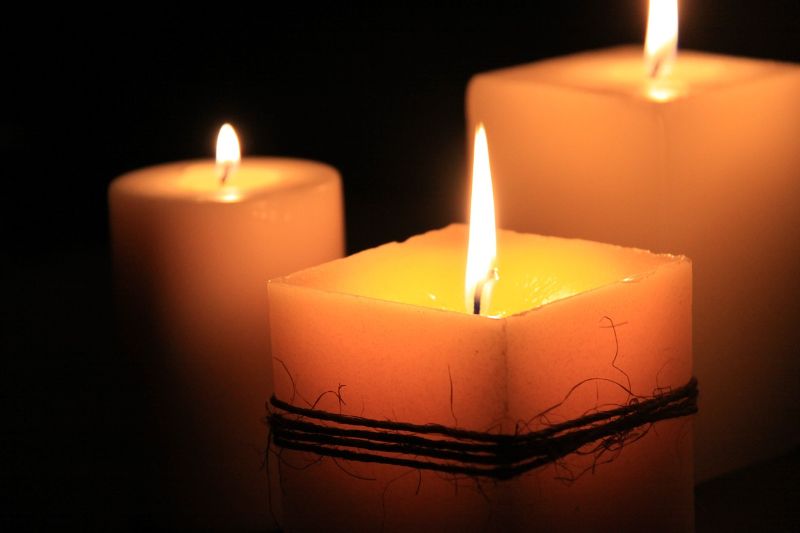
If you've never kept an altar before, I recommend starting simply with a single candle and a photograph of someone who represents something you want to grow more of in your life.
If and when it feels right to you, you can gradually add to your altar throughout the weeks, months, and years.

Arrange Your Altar
After you've cleansed your altar space (physically and/or spiritually), consider how you'd want to arrange the precious things you've collected on your altar.
Simple is better here, as having fewer artifacts will make it easy for them to find a place on your new altar.
If you want to protect the surface of your altar from incense ash or candle wax, start by laying down an altar cloth or a plate.
Many spiritual practices for altar building follow the rule of symmetry. Consider starting with the largest or tallest item and working your way outwards. You can also use plants/flowers, candles, and photos to symbolically match your favorite thing in the middle.
Work With Your Altar
If you're overwhelmed, starting with only one modest ritual per season is perfectly acceptable. Perhaps you clean and repaint your altar at the start of each season, putting out objects that signify the new season. For example, in the spring, you may put out a vase of fresh flowers, in the summer, sand and seashells, in the fall, pumpkins, and in the winter, holly and white candles.
Consider spending at least five minutes a day or fifteen minutes a week at your altar to meditate, journal, or set intentions if your goal with your altar is to build a more frequent practice of spiritual self-care.
My new moon and full moon rituals are two activities you can begin conducting at your altar every lunar cycle to give yourself time to check in with yourself.
The more you use your altar, the more it will become a sacred focal point in your daily life, amplifying warm, wonderful vibes throughout your house.
Because we all exist in the same universe, it's important to remember that we're all the same behind the layers of race, color, and gender. The gift of stars has been bestowed upon you.

What is a spiritual altar?
Simply described, an altar is a physical object or combination of objects that have spiritual importance to you, or that reflect an element, archetype, or energy whose influence you would like to have present in your spiritual practice, arranged in a meaningful fashion and in a purposeful place.
How do I activate my altar?
You've finished building your Altar. You could be a seasoned Priestess or ceremonialist, or this could be your first time. Always keep in mind that we all have the ability to connect to Life and Source and to produce beautiful sacred energies. In front of your Altar, take a moment to contemplate. Take it all in, what you've made. Take a deep breath and gaze at the symbols, feeling the energy and force of the physical manifestation of your prayers and aspirations. Activate your Altar by speaking your intentions aloud, calling forth your teachers and guides, or any Spiritual Archetypes you resonate with, lighting a candle, striking a bell, and imagining a gateway of energy opening above the Altar, bringing pure divine energies into your room. Create new steps to the ceremony using your instincts. You could include the following:
Taking photos and writing out a description of your Altar in your journal. Please share your images and writings with me! I'd like to know and keep track of your intentions! You can leave a remark in the section below.
While the Altar is up, you can begin to activate the Altar and your intentions, and add to them as you wish day by day.
Above all, have fun and know that you're connecting to everything in a beautiful way.
What should I put in my altar?
Because altars are a kind of artistic expression, you can construct yours as simple or as elaborate as your heart desireswhatever seems right for you. “My most important piece of advice right now is to tune in to your intuition and most alive intentions,” Pichinson says. “Then build it from here point.”
Novo recommends writing out your spiritual intentions, such as what you're trying to call into your life, the energy you're trying to embody, or ancestors you'd like to support you, if you're a pen to paper type of mystic. Try something like “I am attracting greater love and success into my life” or “I am nurturing the sensation of safety and tranquility in my body” when crafting an intention. “Once you have those answers,” she advises, “start collecting stuff that have the same vibe as what you just laid out.”
So, what should you put on your altar, exactly? Novo promotes anything that encourages you to connect with your spiritual side or reminds you to create the energy you desire to embody. Consider the following scenario:
However, even if it isn't generally regarded magical or spiritually significant, you can put anything special and valuable to you on your altar. Seashells, for example, are kept on Novo's altar to remind her to be in flow.

When should I raise my altar?
You are supposed to build an altar whenever God reveals Himself to you. Whenever God speaks to you in a dream or in any other way, you must secure those blessings by going straight to your established altar or by erecting an altar at that location and sealing the revelation with a sacrifice offering. You can make a promise by sacrificing your money, your time, your food, your worship, and so on. But, for the love of God, do anything. Allowing that divine visitation to pass you by without making the most of it is a mistake. As a result, it isn't a physical altar.
When God's angel appeared to Manoah and her husband, Sampson's parents, they wasted no time in erecting an altar and offering a sacrifice: (Jud. 13:19). When Gideon had an angelic experience, he did the same. “Depart not, I implore thee, until I return unto thee and bring forth my present, and lay it before thee,” he said to the angel. (Judges 6:18a & 6:19a & 6:19a & 6:19
Every morning, Jesus, our forerunner, went to His customary spot of prayer on the Mount of Olives. That was His own private altar. He had constant open heavens as a result of everyday visitation to His altar (Mk.1:35).
Where should you place an altar in your home?
A solid foundation is required for any home altar. Feng shui altars are traditionally made of wood, but any firm foundation would suffice. Typically, a shelf, table, mantle, or desk are excellent possibilities. Some Feng Shui practitioners believe that the altar should always be over your shoulders, but if you're using it for meditation, it's more practical to have it closer to the ground, so altars that are hip-height or knee-height can suffice.
What do you do at the altar?
An altar is a structure with a raised upper surface used for religious offerings, sacrifices, and other ritualistic functions. Shrine, temples, churches, and other places of worship all have altars. Paganism, Christianity, Buddhism, Hinduism, Judaism, and Modern Paganism all make use of them. They were also used by many historical faiths, including the Roman, Greek, and Norse cults.
How do I connect to the altar?
Make it your own. Feel free to experiment with different flavors. Do what you feel is right for you.
Continue to think, move, meditate, or pray in your Altar as a sacred location.
What is the altar of prayer?
Altars were used in the Bible for sin atonement sacrifices as well as to commemorate a meeting with God. In Genesis 12, for example, God meets with Abraham and pledges to bless him. Abraham constructed an altar to the Lord as a memorial to this experience.
It's a place where we may reflect on all that he's done for us and ask for forgiveness for our transgressions. It's a location where we can commune with God through the Holy Spirit and present ourselves as living sacrifices.
How can I make my altar more powerful?
Upgrades. Various blocks and items can be placed on the top face of the structure, as well as around it, to energize the Altar. In the conversation log, current power/maximum power (recharge rate) shows how much power the altar presently has, the maximum power it can have, and the rate at which it recharges.