
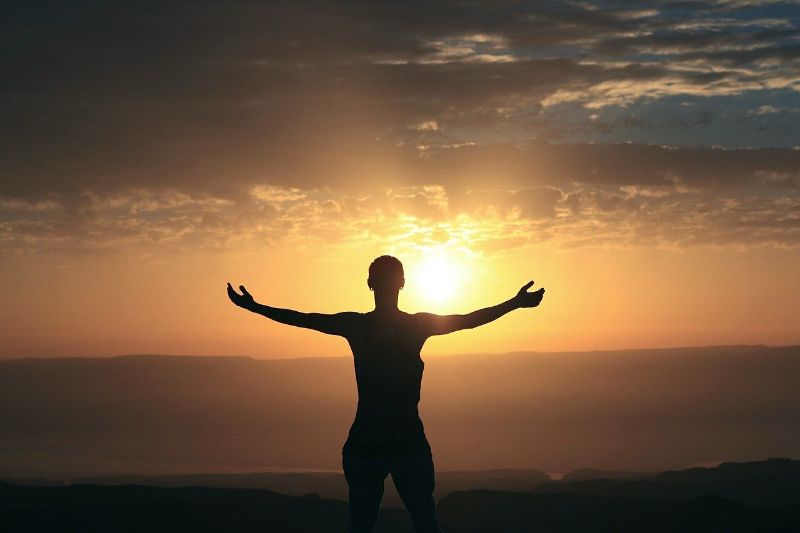
Spirituality is a topic that is frequently discussed, but it is frequently misinterpreted. Many individuals confuse spirituality and religion, and as a result, they bring their religious ideas and prejudices into debates about spirituality. Although spiritualism is emphasized in many religions, you can be “spiritual” without being religious or a member of an organized religion.
Before You Continue...
Do you know what is your soul number? Take this quick quiz to find out! Get a personalized numerology report, and discover how you can unlock your fullest spiritual potential. Start the quiz now!
What is the meaning of religious but not spiritual?
According to Abby Day, some people who are critical of religion regard it as dogmatic and oppressive, prompting them to label themselves as atheists or agnostics. SBNR is for many individuals about not simply rejecting religion openly, but also not wanting to be bound by it.
SBNRs, according to Linda Mercadante, are adamantly anti-dogmatic when it comes to religious belief in general. They argue that belief is not only non-essential, but also possibly damaging or at the very least an impediment to spirituality.
Many of those surveyed who identify as SBNR, according to Philip D. Kenneson, experience a conflict between their own spirituality and participation in a traditional religious organization. The majority of them respect intellectual independence, curiosity, and an experimental approach to religion. Many people consider organized religion to be the main opponent of genuine spirituality, stating that spirituality is about private meditation and private experience rather than public ceremony. To be “religious” has an institutional sense, which is commonly connected with Abrahamic traditions: attending worship services, saying Mass, lighting Hanukkah lights, and so on. Being “spiritual,” on the other hand, implies personal practice and empowerment related to life's core objectives. As a result, spirituality has grown to have mostly positive connotations in societies that are strongly distrustful of institutional systems and place a high importance on individual freedom and autonomy, whereas religion has been viewed more unfavorably.
The SBNR phenomenon, according to Robert Fuller, is a mix of intellectual progressivism and mystical hunger, restless with traditional churches' piety.

Spirituality, according to Robert Wuthnow, entails far more than attending church and agreeing or disagreeing with church doctrines. Spirituality is the colloquial phrase for a person's relationship with God in Western culture. What many people see and do in their congregations surely influences how they think about religion and spirituality. It involves a person's self-identityfeeling loved by Godat a deeper level, and these feelings might wax and wane.
Is being spiritual the same as being religious?
Although it can be difficult to distinguish between spirituality and religion, there are some clear distinctions between the two. Religion is a collection of organized ideas and behaviors that are usually shared by a community or group of people. Spirituality is more of an individual discipline that involves feeling at ease and having a sense of purpose.
What makes a person religious?
The simple explanation is that God in whatever shape you believe he/she/they take(s) is real, and people believe because they communicate with it and see evidence of its presence in the world. Only 16 percent of the world's population is nonreligious, yet it still amounts to 1.2 billion people who find it impossible to reconcile religious notions with what they know about the world.
For centuries, great thinkers have struggled with the subject of why humans believe. Religion, for example, has been referred to as the “opium of the people” by Karl Marx. God, according to Sigmund Freud, is an illusion, and worshipers are reverting to their infantile desires of protection and forgiveness.
The idea that human evolution has created a “god-shaped hole” or given us a metaphorical “god engine” that can lead us to believe in a deity is a relatively contemporary psychological theory. Religion is a by-product of a variety of cognitive and social adaptations that have been enormously essential in human development, according to this idea.
Can you be religious spiritual?
By agreeing or disagreeing with religion's teachings and following spiritual principles, you can live your spiritual life and be religious. Religions and spirituality both offer a road to God-realization.
Which is better religion or spirituality?
When we look at the vastly varied ways people try to define and convey that distinction, we can see that there's something fishy about it. Take a look at these three definitions found on the internet:
- Religion is a human institution that was developed for a variety of reasons. Exert control, instill morality, stroke egos, or whatever else you choose to call it. Religions that are organized and organised almost completely eliminate God from the equation. You confess your sins to a priest, worship in ornate churches, and are advised what to pray for and when to pray it. All of these things separate you from God. Spirituality is something that a person is born with and grows into as they grow older. It could be sparked by religion or by a divine revelation. Spirituality encompasses all aspect of a person's existence. Spirituality is a choice, whereas religion is frequently imposed. To me, being spiritual is more vital and superior to being religious.
- Religion can be whatever the individual who practices it wishes. God, on the other hand, defines spirituality. Religion is a manifestation of the flesh since it is defined by man. Spirituality, on the other hand, is a manifestation of God's nature, as defined by Him.
- True spirituality can only be discovered deep within one's own self. It's how you love, accept, and relate to the world and the people in it. It can't be found in a church or by adhering to a certain set of beliefs.
What is the difference between spirituality and spirituality?
Though spirituality and spiritualism have similar appearances, their meanings are distinct. The majority of individuals confuse Spirituality and Spiritualism, believing that they have the same meaning. Spirituality exists within a person's psyche. It is a state or situation that a person achieves after a long period of attempts and trials. Spiritualism, on the other hand, is the concept that the dead have the power to connect with the living and desires to do so. Let's take a closer look at the phrases spirituality and spiritualism, as well as the differences between them.
What do you mean by spirituality?
Spirituality is defined as the awareness of a feeling, sense, or belief that there is something more to being human than sensory experience, and that the greater total of which we are a part is cosmic or divine in nature.

What are the characteristics of a spiritual person?
The Latin words “spiritus” (meaning breath, courage, strength, or soul) and “spirare” (meaning to breathe) are combined to get the term “spirit” (1). Meaning, worth, transcendence, connecting (with oneself, others, God/supreme power, and the environment), and becoming (life's growth and progress) are five qualities of spirituality (2).
Since the inception of spiritual health and its different definitions, it has been five decades. Spiritual health is concerned with one's relationship with one's own self (personal dimension), people (social dimension), nature (environment), and God (transcendental dimension) (3). The following are the main qualities of spiritual health: a healthy lifestyle, social connections, inquiring about the meaning and purpose of life, and transcendence (4). For many academics, spiritual health is so crucial that it is considered one of the most significant components of health (5). Spiritual health leads to improved mental health (6) and is favorably associated to physical health, for example, it may assist patients experience less pain, according to multiple research conducted on diverse patients (7).
Scientists and academics have looked at spiritual health from numerous perspectives and presented several definitions, but they have yet to come up with a comprehensive description. Providing a complete definition for spiritual health, identifying the components and markers of spiritual health, and its impact on other areas of health are all major obstacles in treating spiritual health issues. Despite the fact that a number of studies have been undertaken in Iran on the subject of spiritual health (5, 7), experts believe there are not enough studies on the definition of the term. Because of the relevance of the topic, the paucity of literature, and the necessity to include multiple perspectives on spiritual health, this study was undertaken in Iran to investigate the definition, components, and indicators of spiritual health from the perspective of specialists.